Nave Mestra
Nave Mestra
A granite formation in the Serra da Estrela, Nave Mestra combines a dramatic rock fissure, a 1910 house and expansive views over the Zêzere valley.
Nave Mestra, also known as Nave da Barca due to its ship-shaped granite outcrop, is a geological formation located in the municipality of Manteigas, at the heart of the Serra da Estrela natural park. The site brings together a spectacular rock fissure, a small stone house dating from the early 20th century, and sweeping views across the glacial Zêzere valley.
Why visit Nave Mestra
The site combines three points of interest rarely found together: a geological curiosity born from the natural fracturing of a granite cliff, a testament to Portuguese mountain pastoralism and habitat, and a vantage point overlooking one of the country's most striking glacial valleys. A visit remains accessible to anyone in reasonable physical condition, with no entrance fees or heavy tourist infrastructure.
- A rock fissure you traverse from top to bottom, flanked by imposing granite blocks.
- A stone house from 1910 with a monolithic roof, showcasing local craftsmanship.
- Clear views across the Zêzere valley and Covão da Ametade.
- Several marked trails departing from Manteigas.
History and legend of the site
Nave Mestra has served as a refuge for shepherds and their flocks since antiquity. The cliff's configuration and the presence of water made it a natural stopping point on the Serra da Estrela's transhumance routes.
According to local tradition, the location also served as a meeting point for Portuguese republicans during their struggle against the monarchy in the late 19th and early 20th centuries. This account rests on oral memory and lacks formal documentation.
Judge Matos's house
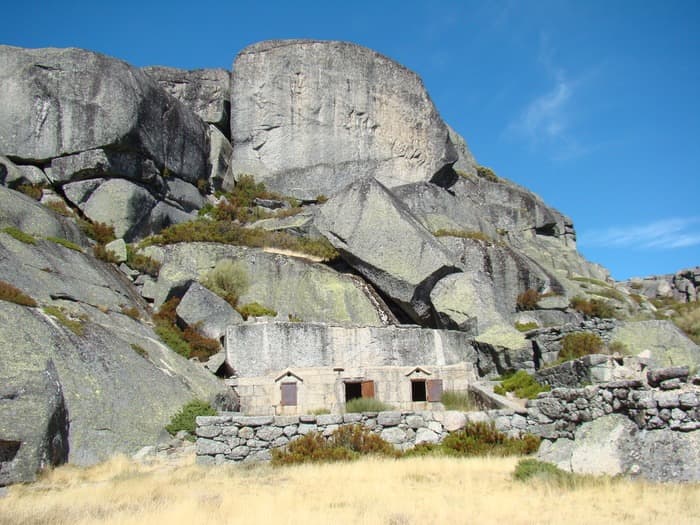
In the lower part of the site stands a small stone house built in 1910, once belonging to Judge Dr Matos. Given the location's extreme remoteness, materials were transported from Manteigas on mule-back. What distinguishes the structure most is its multi-ton granite roof, whose placement by hand using period-appropriate methods speaks to the extraordinary effort mobilized to construct the building.
What to see on site
The granite fissure
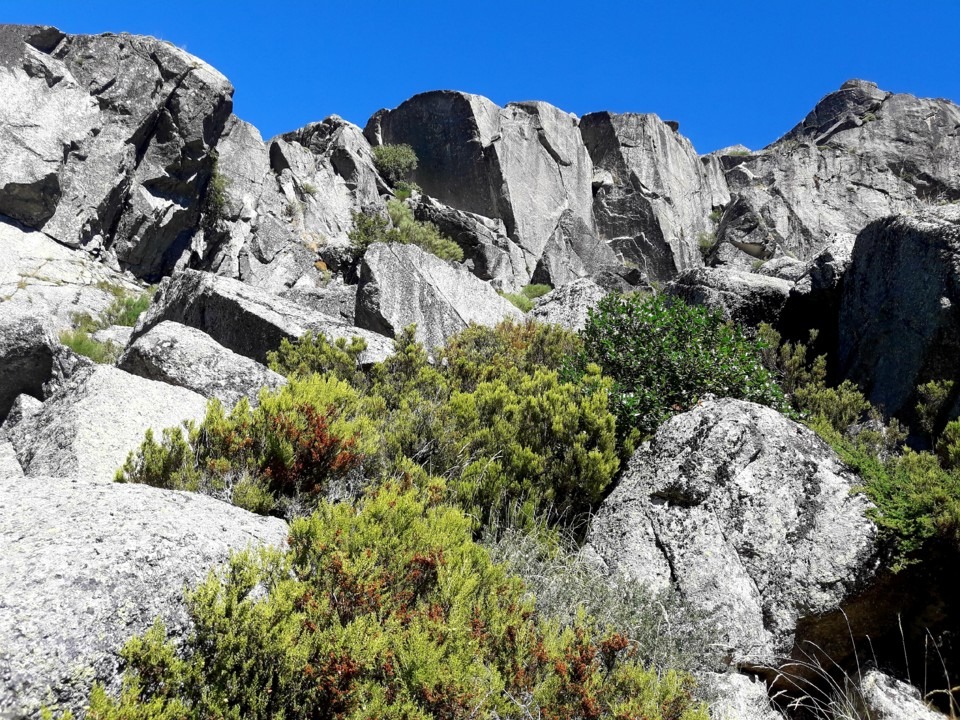
The central geological feature is a natural fracture in the cliff face. You enter from the upper section, then descend gradually to the lower exit, framed by imposing rock walls and boulders. The passage requires some care with your footing but presents no technical difficulty.
Views across the Zêzere valley
Upon exiting the fissure, your gaze opens onto the glacial valley descending toward Manteigas and rising toward Covão da Ametade, where the Zêzere river has its source. Pastures, erratic boulders and watercourses compose a landscape characteristic of the high Serra da Estrela.
The stone house
Below, Dr Matos's small house draws attention less for its architecture than for its monolithic roof. A pause allows you to observe the construction details.
When to visit
The most favorable period runs from June through September, when daylight is long, trails are clear and rainfall limited. Spring offers flower-filled meadows and well-fed watercourses, though weather remains changeable at altitude. Autumn suits experienced hikers; winter brings snow and fog, making access tricky without proper equipment.
Even in summer, plan for a warm layer: temperatures remain cool at these Serra da Estrela elevations.
How to get there
Nave Mestra is accessible only on foot, via marked trails departing from Manteigas. Two commonly used routes are:
- Rota do Carvão (PR4MTG): a themed trail dedicated to the historic charcoal production activity.
- Rota do Maciço Central (PR5MTG): a more challenging itinerary crossing the Serra da Estrela's central massif.
Allow several hours round-trip depending on which trail you choose, with notable elevation gain. A Serra da Estrela map or GPS track is recommended.
Practical information
- Level: mountain hiking; good fitness required.
- Equipment: hiking boots, sufficient water and food, warm clothing and windproof layer even in summer.
- Access: free; no entrance fee or opening hours.
- Mobile coverage: variable; inform someone of your planned route.
Frequently asked questions
Nearby
Nave Mestra unfolds within the broader context of a stay in Manteigas and the Serra da Estrela. Travelers drawn to the region's glacial landscapes often extend the visit with the Garganta de Loriga, another glacier-carved valley. For local textile and industrial heritage, Burel Factory provides insight into Serra wool. Further west, the Museu do Caramulo rounds out discovery of central Portugal.
Weaving Nave Mestra into your journey
Nave Mestra fits naturally into an itinerary devoted to the Serra da Estrela or central Portugal, alongside the region's historic towns. To craft a bespoke circuit, explore our Portugal travel ideas.
Nearby

Interested in this visit?
We can include it in your personalised itinerary.