Lisbon
Lisbon
Built on seven hills overlooking the Tagus estuary and blessed with a unique climate that makes it ideal to visit in any season, Lisbon is one of the most cherished destinations on the Iberian Peninsula.
Built on seven hills overlooking the Tagus estuary and blessed with a unique climate that makes it ideal to visit in any season, Lisbon is one of the most cherished destinations on the Iberian Peninsula. Its charm lies in its singular character, blending the medieval with the modern era. During your visit, you will be captivated by its historical monuments (many of which are UNESCO World Heritage sites), its tourist attractions, and the vibrant culture of its inhabitants.
History
From the Neolithic to the Age of Discovery
During the Neolithic period, the Lisbon region served as a refuge for pre-Iberian populations, later joined by Celtic peoples. In Roman times, it was one of the most important cities in Hispania (the Roman province covering the Iberian Peninsula).
Around 719, Lisbon was conquered by the Moors. These Muslims from the Maghreb and Near East built defensive walls around the city. They resisted several Viking attacks, except for the one led by Hasting in 858. During the Crusades, Lisbon was reclaimed by Christians following its siege by Afonso Henriques, who subsequently became Portugal's first king.
In 1255, Lisbon was designated the capital of Portugal due to its strategic geographical location. It subsequently experienced significant growth over the following centuries.
From the Age of Discovery to Modern Times
During the Age of Discovery, Lisbon was the principal departure point for Portuguese maritime expeditions to South America, Africa, and the Indies. It subsequently became one of Europe's most prosperous trading centers.
The year 1755 marked the end of Lisbon's golden age, when a violent earthquake followed by a tsunami and fires destroyed 85% of its infrastructure. It was rebuilt according to modern urban planning principles (featuring wider streets).
In the early 19th century, Lisbon was occupied and plundered by the troops of Napoléon Bonaparte. The city only revived after the return of King João VI, who had fled to the Brazilian colony during the Napoleonic invasion.
In 1910, Lisbon became the starting point of an uprising against the Portuguese monarchy. During World War II, Portugal was officially neutral, and Lisbon served as a departure point for refugees heading to the United States. It also harbored numerous spies during this period. In 1974, the struggle that ended the authoritarian regime established by Salazar began in Lisbon. Finally, in 1994, Lisbon became the European Capital of Culture.
What to Discover in Lisbon?
Portugal's capital city is brimming with tourist attractions, with museums and historical monuments taking pride of place. These are followed by public squares, the Lisbon Oceanarium, numerous gardens and viewpoints, and more.
The Museums
Palácio Nacional da Ajuda
Nestled atop Ajuda Hill, this palace was the final residence of the Portuguese monarchy. It has been open to the public as a museum since 1968. Built after the 1755 earthquake, it adopts a neoclassical style and contains furnishings, decorative arts, and paintings belonging to the kings. The rooms are arranged as they were during the royal period.
Museu Nacional de Arte Antiga
This museum of ancient art houses thousands of works: Portuguese and European paintings, sacred and decorative arts, objects brought back from Portuguese discoveries and commerce, and more. Its collection spans the entire period from the 14th to the 19th century.
Museu Nacional do Azulejo
Focused on decorative tile work, this museum chronologically presents the history of this art form from the Moorish period onward. Its most celebrated piece is a panoramic tile panel measuring 36 meters, depicting Lisbon before the 1755 earthquake.
Museu de Arte, Arquitetura e Tecnologia (MAAT)
This modern museum first captivates visitors with its extraordinary architecture, resembling an alien spacecraft that has just touched down. It is topped with a rooftop terrace offering views over the Tagus and wrapped in gleaming white tiles. Inside you'll find works by contemporary artists, designers, and architects (Portuguese and foreign), as well as exhibitions on innovative technologies.
Museu do Oriente
It showcases Portugal's influence in Asian and Far Eastern countries such as China, India, Macao, and Japan. Its rich collection includes terra cotta figurines from the Ming and Qing dynasties, Namban artworks (Japanese art from the 16th and 17th centuries), and jewels from Timor.
Museu Calouste Gulbenkian
This museum ranks among Europe's most renowned and houses over 6,000 pieces. These present more than 4,000 years of history, spanning from ancient Egypt to contemporary Portugal. You will observe Roman medallions, Persian and Turkish carpets from the 17th century, French decorative arts from the 18th century, or even an armchair that once belonged to Marie-Antoinette…
Religious Monuments
The 1755 earthquake destroyed a great number of Lisbon's churches. However, most were rebuilt and adopted an architectural style typical of the late 18th century, with interiors characteristically Portuguese.
Among the most renowned religious monuments are:
Igreja de São Roque
This 16th-century church features simple façades but a truly stunning interior. It comprises 8 chapels adorned with magnificent gilded sculptures, paintings, and decorative tiles.
Mosteiro dos Jerónimos
Listed as a UNESCO World Heritage site, this impressive monastery exemplifies the remarkable Manueline architecture (Manueline art is an artistic expression typifying 16th-century Portugal). It also houses the tombs of Portuguese heroes, including Vasco da Gama.
Basílica da Estrela
This Baroque and Neoclassical basilica boasts lovely façades and a resplendent exterior. It is distinguished by its immense nativity scene, the largest in the country.
Igreja da Santa Engrácia
It is one of Portugal's earliest Baroque churches. Shaped as a Greek cross, its majestic dome measures 80 meters in height.
Sé de Lisboa
Erected following the Christian Reconquest of Lisbon by Afonso Henriques, Sé de Lisboa is Lisbon's cathedral and its oldest church. It features Romanesque architectural style but has undergone multiple modifications over the centuries.
Non-Religious Monuments
Non-religious monuments abound throughout Portugal's capital. Those not to be missed during your visit are:
Castle of São Jorge
Perched atop Lisbon's highest hill, this castle commands breathtaking views across the entire city. It was built by the Visigoths in the 5th century, then modified by the Moors, King Afonso Henriques, and others. Many historical events have taken place within its walls. One notable example is the audience concerning the discovery of the sea route to the Indies, presented by Vasco da Gama to King Manuel I.
Torre de Belém
Built in the 16th century, this tower played an important role in protecting Lisbon's port and the mouth of the Tagus. Indeed, you will observe 16 defensive cannons here. This fortress is one of the most important examples of Manueline style and was designated a UNESCO World Heritage site in 1983.
Padrão dos Descobrimentos
This monument was inaugurated in 1960, marking the 500th anniversary of the Portuguese age of discovery. Standing 52 meters tall, it represents the country's greatest explorers aboard the type of sailing vessel they used to explore the Atlantic Ocean.
Elevador de Santa Justa
This elevator, built in 1902, connects two neighborhoods of the city: Baixa Pombalina and Bairro Alto. It is constructed of wrought iron and rises to a height of 45 meters.
Aqueduto das Águas Livres
This enormous aqueduct survived the 1755 earthquake. It consists of 35 arches and measures 941 meters in length. This structure supplies water to 30 fountains throughout Lisbon.
Public Squares
Lisbon is home to numerous squares, some of which are comparable to Madrid's Plaza Mayor or New York's Times Square.
Praça do Comércio
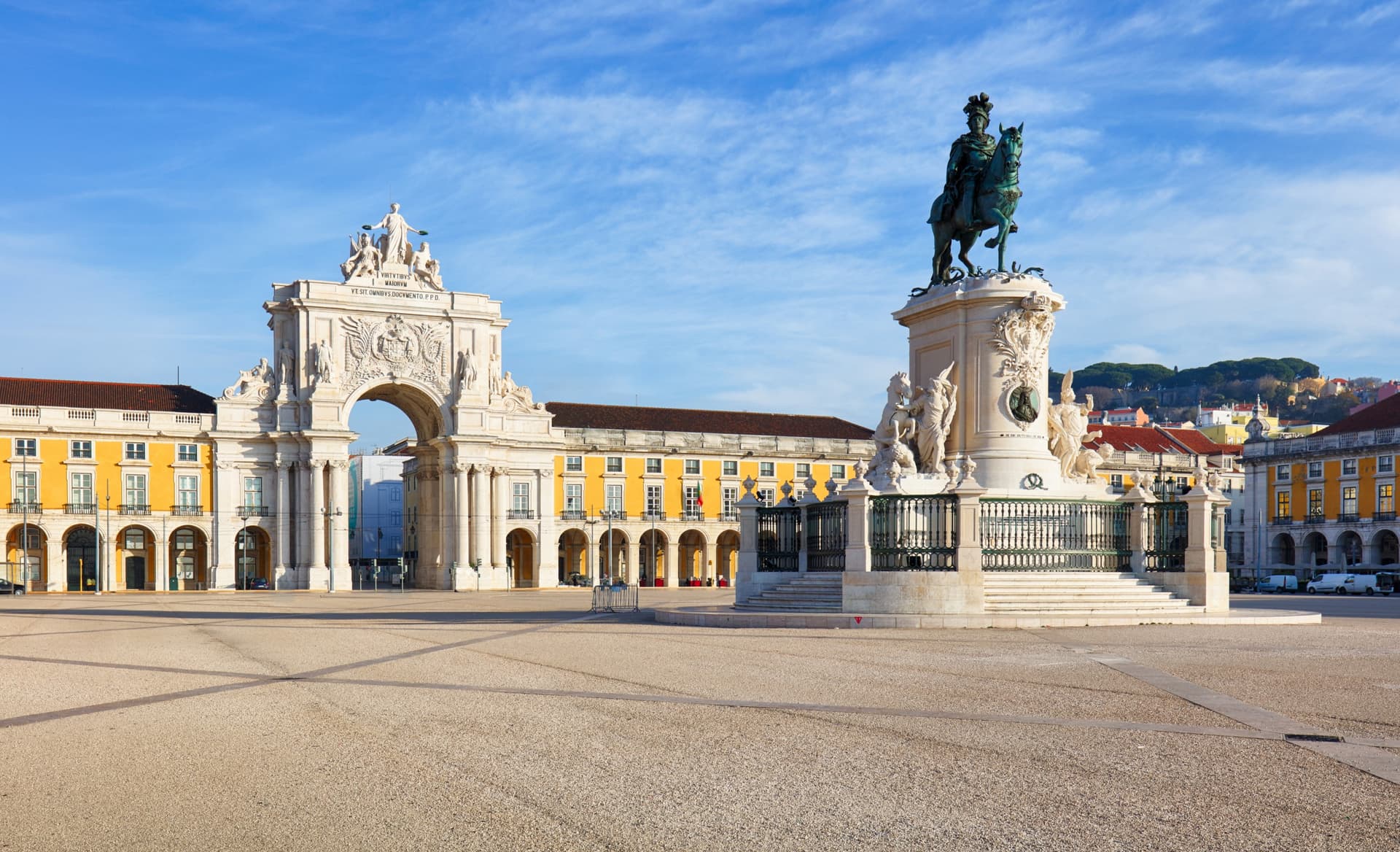
This is Lisbon's main square. It is located on the site of the royal palace prior to the 1755 earthquake. Access is overlooked by another iconic monument, the Arco Triunfal da Rua Augusta. This area opens onto the Tagus and is bordered by numerous restaurants where you can savor Portuguese dishes and wines.
Praça do Rossio
This is the heart of Lisbon. It has witnessed numerous historical events: political gatherings, military parades, bullfights, and more. At its center stands a Baroque fountain from the late 19th century and a 28-meter column supporting a statue of Pedro IV, the first emperor of independent Brazil and son of King João V.
Praça Luís de Camões
A gathering place for Lisboans, this square is located in one of the city's most frequented neighborhoods, Largo de Camões. Inaugurated in 1867, it honors Luís de Camões, author of Os Lusíadas, Portugal's most celebrated epic. A 4-meter statue of this great poet with a pedestal surrounded by other celebrated writers stands at the center of this space. Beautiful Pombaline architecture buildings surround it as well.
Other Tourist Attractions in Lisbon
Oceanário de Lisboa
This oceanarium, which appears to float on the sea, ranks among the world's most beautiful. It is Portugal's favorite cultural institution, receiving one million visitors annually. It houses over 15,000 marine creatures representing more than 450 species. These originate from all the world's oceans.
Time Out Market Lisboa
This is a food hall operated by Time Out Group. Created in 2014, it houses approximately 36 restaurants and kiosks, some owned by renowned Portuguese chefs. It is a highly animated tourist destination where you can sample Portuguese specialties such as Alentejo ham, Azeitão sheep cheese, Manteigaria cream tarts, grilled fish and seafood, and more. International cuisine is also served here.
Alfama
Alfama is Lisbon's oldest and most emblematic neighborhood. Situated on rocky substrates, this part of the city survived the 1755 earthquakes and retains its medieval character with narrow, winding streets.
Jardim Botânico Tropical
Created in the early 20th century, this botanical garden is home to plants from Portugal's former African and Asian colonies, especially those from Macao. It is a peaceful place for strolling, containing nearly 4,000 plant species.
Miradouro São Pedro d'Alcântara
This viewpoint perched on a hillside offers a 180-degree panorama of Lisbon. It is the city's most spectacular overlook. Its beauty stems from its location, its superb garden, and its map rendered in Portuguese tiles, which indicates points of interest to appreciate.
What to Do in Lisbon?
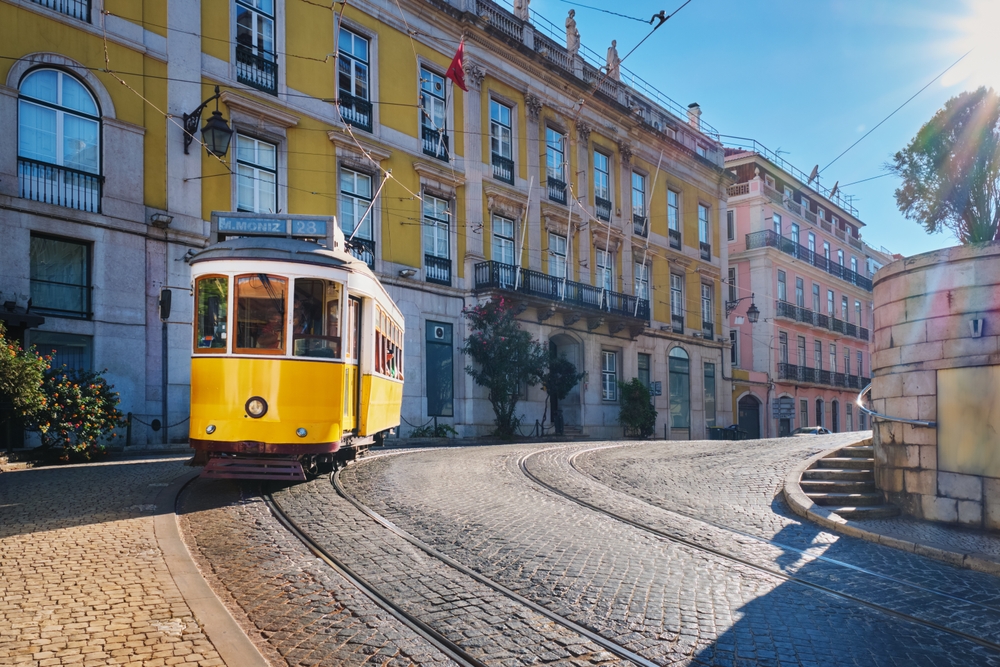
During your trip to Lisbon, don't miss riding aboard the famous tram 28 (line 28). Traversing the city from east to west, it passes numerous tourist attractions including Basílica da Estrela, Sé de Lisboa, scenic viewpoints, and more. You can also take a boat excursion on the Tagus and admire Lisbon from the water.
Lisbon is also renowned for culinary tourism. For this, head to the neighborhoods of Bairro Alto, Baixa, and Mouraria. In some of these restaurants and bars, you will discover "fado," a traditional song form typifying Portuguese culture whose themes are often melancholic. It was inscribed on the UNESCO World Heritage list.
Best Time to Visit Lisbon?
Summer, which extends from mid-June to mid-September, is sunny and moderately warm. Massive crowds of tourists flock to the city during this period. Thus, the best time to visit Lisbon is between mid to late spring (mid-April to mid-June) or during autumn (September through November). During these periods, temperatures range between 22 and 24°C with little rainfall. Flight fares and hotel prices are also less expensive than in summer.
Numerous means of transportation crisscross Lisbon. Trams can be used to explore the city center or depart from it to Belém. Buses are more comfortable and serve the city well. You can also use the metro to travel from the city center to more distant points such as Lisbon airport or certain museums.
Funiculars are located in the city center and serve only to go up or down the hill. Ferries are used to reach the southern bank of the city. Lisbon also puts panoramic buses at tourists' disposal, which follow a tourist circuit. Taxis are also available to explore the city.
Additional Information
To enjoy an economical stay, you can purchase the Lisboa Card. This official tourist pass for the city of Lisbon will allow you, among other benefits, to enjoy access to most of the city's museums (over 25 museums or monuments) and public transportation. You can, for instance, travel unlimited on buses, metro, trams, and funiculars, as well as on the famous tram line 28 and enjoy the Santa Justa elevator. The train journey to Sintra and Cascais is also included. Its price varies according to age and the number of valid days, ranging from €13.50 for children to €44 for 3 days for an adult.
Want to discover this destination?
Our local advisors design your tailor-made trip.