Tomar
Tomar
Tomar, a Templar town in central Portugal, is dominated by the Convent of Christ, a Manueline masterpiece listed as a UNESCO World Heritage site. A compact historic centre, medieval synagogue and countryside dotted with aqueducts complete the visit.
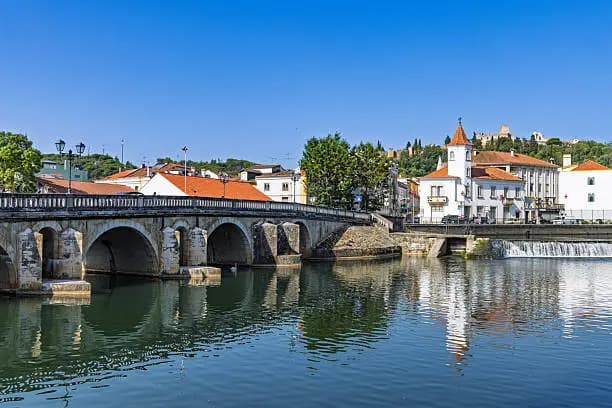
Tomar is a mid-sized town in central Portugal, situated on the banks of the Nabão river, midway between Lisbon and Porto. Its worldwide renown stems from the Convent of Christ, a fortified Templar monastery listed as a UNESCO World Heritage site. A living town that remains surprisingly untouched by tourism relative to its historical significance, Tomar offers a compact historic centre, a beautifully preserved medieval synagogue and lush countryside crossed by Roman-era aqueducts.
Quick Practical Info
- From Lisbon: direct train from Santa Apolónia or Oriente station, approximately 1.5–2 hours depending on service.
- From Porto: train with a change at Entroncamento, approximately 2.5 hours.
- By car: motorway A23 from Abrantes or A1 via Torres Novas.
- Recommended duration: a full day for the Convent of Christ and the town centre; two days to explore the surrounding area.
- Dress code: shoulders and knees covered to visit the Convent of Christ (historic place of worship).
What You'll See
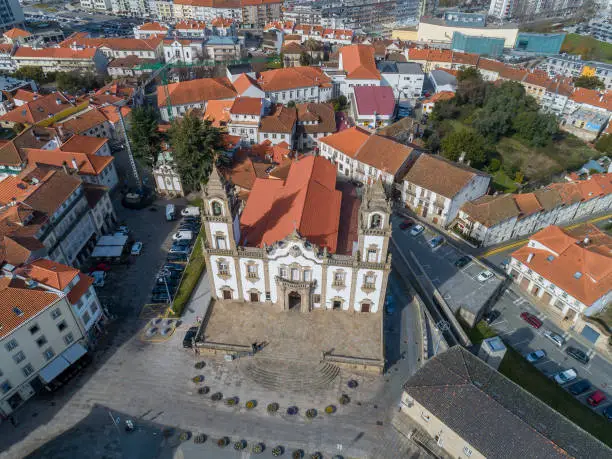
The Convent of Christ dominates the wooded hillside above the town: its twelfth-century Templar round church, Renaissance cloisters and celebrated Manueline window make it a monument of remarkable architectural density. Below, the historic centre revolves around Praça da República, lined with arcades and the church of São João Baptista. The Synagogue of Tomar, among Portugal's best-preserved medieval synagogues, now houses a small Luso-Hebrew museum. The Mouchão Park, a river island within the town, offers a shaded riverside walk along the Nabão.
History and Context
Tomar was founded in the twelfth century as the headquarters of the Order of the Temple in Portugal. Following the Order's dissolution in 1314, King Denis I established the Order of Christ, heir to the Templars, which made this its administrative centre. Under Henry the Navigator, the Order's Grand Master, Tomar became a key hub for financing Portuguese maritime exploration. Wealth brought back from the Indies financed the convent's expansion, including its Manueline window—symbol of maritime power—carved around 1510–1515.
Highlights of Your Visit
The Convent of Christ
The Charola, a sixteen-sided Templar rotunda inspired by the Church of the Holy Sepulchre in Jerusalem, is the site's original heart. Around it unfold eight cloisters in different styles—Romanesque, Gothic, Renaissance—built over three centuries. The chapter house window, a masterpiece of Manueline style, weaves together ropes, corals, armillary spheres and the Order of Christ's cross in a vertiginous composition.
The Medieval Synagogue
Built in the fifteenth century, this Gothic synagogue with four central columns is among the rare examples surviving in Portugal after the Jewish expulsion of 1496. It houses Hebrew tombstones and liturgical objects gathered from across the country.
The Festival of Tabuleiros
Every four years (in even years divisible by 4), Tomar holds the Festa dos Tabuleiros, a procession in which hundreds of young women carry on their heads towers of bread and flowers reaching their own height. A major Portuguese folk event, it draws tens of thousands of visitors.
The Pegões Aqueduct
A few kilometres from the centre, this seventeenth-century aqueduct supplied the convent with water. Its double-tiered arches stretch for several kilometres across the countryside—a little-visited and photogenic site.
Etiquette and Visiting Rules
- Shoulders and knees must be covered to enter the Convent of Christ.
- Silence and respect in the synagogue, which remains a place of remembrance.
- Photography is permitted in most areas of the convent; check for restrictions in the Charola.
Photography Tips
The Manueline window faces west: late afternoon light reveals its carved reliefs beautifully. Arrive early to photograph the Charola without crowds. The Pegões aqueduct suits longer focal lengths in the evening, when raking light emphasises the arches. From the convent's esplanade, views over the town and the Nabão are best in the morning.
Location and Access
Tomar lies in Santarém district, approximately 140 km northeast of Lisbon and 170 km south of Porto. The railway station is a few minutes' walk from the town centre. The Convent of Christ is reachable on foot from the centre in about twenty minutes via a wooded path, or by taxi. The historic centre is generally flat and accessible to people with reduced mobility; the climb to the convent has slopes and uneven paving.
Nearby Attractions
- Batalha Monastery — a Gothic-Manueline masterpiece approximately 50 km away, listed as a UNESCO World Heritage site.
- Alcobaça Monastery — a twelfth-century Cistercian abbey, approximately 60 km away, also UNESCO-listed.
- Fátima — a major Marian sanctuary, approximately 30 km to the southwest.
- Constância — a riverside village at the confluence of the Tagus and Zêzere, approximately 20 km away.
- Almourol Castle — a Templar fortress on a Tagus islet, approximately 25 km away.
Frequently asked questions
Spring (April–June) and autumn (September–October) offer pleasant temperatures and fewer crowds. Summer is hot but lively. If the Festa dos Tabuleiros is taking place that year, July is unmissable.
Allow a minimum of two hours to explore the Charola, cloisters and terraces. A half-day allows for a thorough visit without rushing.
It's feasible by car, but ambitious: all three sites are rich in content. It's better to devote one day to Tomar alone and another to the two neighbouring monasteries.
Generally yes in the cloisters and exterior spaces. Some interior areas, particularly the Charola, may have restrictions; check at the entrance on the day.
Yes. Direct train services from Lisbon or Porto serve the town. The historic centre and convent are accessible on foot from the station. For the Pegões aqueduct, a taxi or hired car is recommended.
It is Tomar's traditional festival, held every four years. Hundreds of young women parade while carrying on their heads structures of bread and flowers as tall as themselves. A major Portuguese folk event, the next edition depends on the four-year calendar; check before planning your trip.
Want to discover this destination?
Our local advisors design your tailor-made trip.