Batalha
Batalha
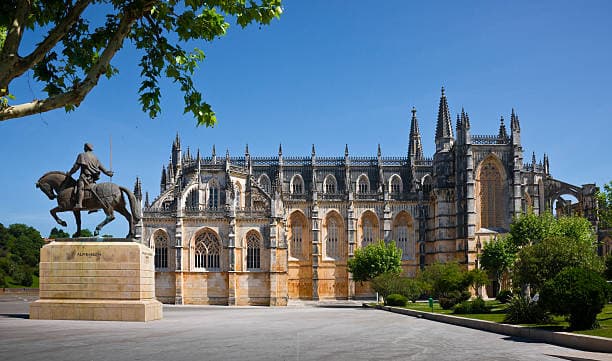
Batalha is home to one of Portugal's most remarkable medieval monuments: the Monastery of Santa Maria da Vitória, built after the Battle of Aljubarrota (1385) and inscribed on UNESCO's World Heritage list.
Batalha is a small town in central Portugal, in the Leiria district, known worldwide for its Gothic-Manueline monastery listed as a UNESCO World Heritage site. Founded around this monument, erected after the Battle of Aljubarrota (1385), the town thrives to the rhythm of this white stone masterpiece. It stands as a major stop along the route of Portugal's greatest medieval abbeys.
Practical Information at a Glance
- Access: approximately 120 km north of Lisbon, reachable by bus from Leiria or Nazaré; a car is recommended for exploring nearby sites.
- Suggested duration: half a day for the monastery alone; a full day to explore the town and surrounding area.
- Dress code: proper attire required in the monastery (shoulders and knees covered).
- Accessibility: the ground floor of the monastery is accessible; some areas remain difficult to reach.
What to See
The Mosteiro de Santa Maria da Vitória — known as the Batalha Monastery — dominates the town. Its main façade blends flamboyant Gothic with remarkably dense Manueline decoration: pinnacles, pointed arches, apostle statues. Inside, the Royal Cloister (Claustro Real) features arcades adorned with vegetal motifs and armillary spheres characteristic of the Manueline style.
The Capelas Imperfeitas (Unfinished Chapels) rank among Portugal's most striking architectural fragments: a monumental octagonal portal, never roofed, open to the sky.
History and Context
Construction of the monastery began in 1386, commissioned by King João I to honor a vow made before the Battle of Aljubarrota. This victory against Castile secured Portugal's independence and established the House of Avis. The construction project spanned more than a century under several reigns, explaining the layering of Gothic and Manueline styles. The monument was inscribed on UNESCO's World Heritage list in 1983.
Highlights of the Visit
The Claustro Real
The Royal Cloister, added under Manuel I in the early sixteenth century, is the monastery's decorative heart. Each arcade is an intricate interlacing of stone: corals, ivy, ropes — symbols of the Age of Discovery. The late afternoon light here is particularly beautiful.
The Chapel of the Founder
The Capella do Fundador houses the tombs of João I and his wife Philippa of Lancaster beneath an octagonal star vault. The tombs of the infants, including Henry the Navigator, line the side walls.
The Capelas Imperfeitas
Accessible through a separate entrance at the back of the monastery, these chapels commissioned by Duarte I were never completed. The unfinished portal, of imposing height, represents one of the purest examples of Portuguese late Gothic.
Etiquette and Visiting Rules
- Shoulders and knees must be covered within the monastery grounds.
- Respectful silence in the Chapel of the Founder and worship spaces.
- Photography is generally permitted without flash in indoor spaces; check signs on site.
- Do not touch sculptures and tombs.
Photography Tips
The main façade faces west: morning light is soft and raking, ideal for highlighting sculptural relief. The Claustro Real photographs beautifully in late afternoon, when sunlight penetrates the galleries. For the Capelas Imperfeitas, overcast skies reduce contrast and reveal portal detail.
Location and Access
Batalha lies in central-western Portugal, about 20 km south of Leiria and an hour's drive from Coimbra. The town is crossed by the N1 and easily accessible by car from the A1 (Lisbon-Porto motorway). Regular buses connect Batalha to Leiria and Nazaré. The monastery is a short walk from the local bus station. Parking is available immediately nearby.
Nearby
- Alcobaça Monastery — about twenty kilometers away, another Cistercian Gothic masterpiece on the UNESCO list, with the tombs of Inês de Castro and Pedro I.
- Nazaré — a beach resort about thirty kilometers away, famous for its giant waves and funicular to the Sítio.
- Leiria — neighboring town with a medieval castle overlooking the Lis river, worth a half-day visit.
- Fátima — major Marian sanctuary about twenty kilometers to the southeast, easily combined in a day.
Frequently asked questions
Spring (April–June) and autumn (September–October) offer pleasant temperatures and fewer crowds. Summer draws more visitors, especially in July–August.
Yes, by car. The three sites form a compact triangle in central Portugal. Allow a well-organized day, starting early in the morning.
Yes: shoulders and knees must be covered. Bring a shawl or change of clothing if visiting in summer.
Photography without flash is generally tolerated in most areas. Respect prohibition signs posted in certain zones.
Regular buses connect Batalha to Leiria and Nazaré. From Lisbon, you will generally need to change at Leiria. A car remains the most convenient option for visiting multiple sites.
Want to discover this destination?
Our local advisors design your tailor-made trip.