Algarve
In southern Portugal, the Algarve stretches 150 kilometres of limestone cliffs, the Ria Formosa lagoon and schist mountain ranges between Sagres and the Guadiana River.
The Algarve occupies the 150 kilometres of coastline that closes Portugal's southern border, from Cape Saint-Vincent to the mouth of the Guadiana River marking the Spanish frontier. Geographically, the region reads in parallel bands: the sandy Atlantic coast, the limestone barrocal covered in almond and carob trees, then the schist serra to the north (Monchique, Caldeirão) peaking at 902 metres at Foia. This structure explains the landscape diversity across short distances—in an hour's drive you pass from beach to mid-mountain villages.
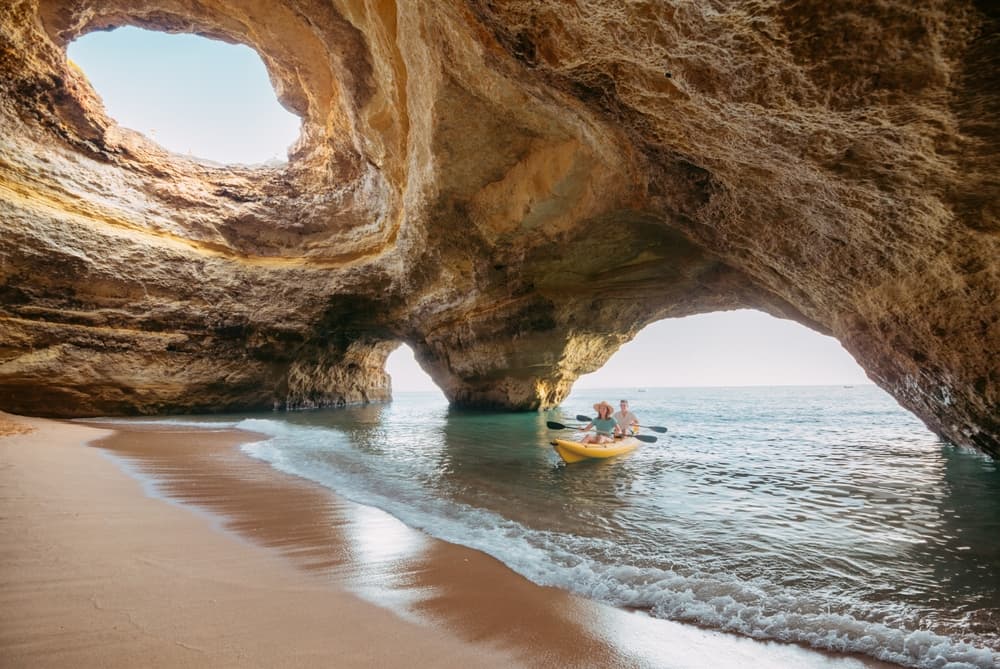
The coast divides sharply in two. To the west, around Sagres, Carrapateira and Aljezur, cliffs plunge into an ocean stirred by north-western winds, water rarely exceeding 18 degrees in summer and beaches like Bordeira or Amado attracting surfers and hikers on the Rota Vicentina trail. From Lagos onward, the coastline turns east, shelters and warms. It's here, between Lagos and Albufeira, that ochre cliffs pierced by sea caves concentrate: Ponta da Piedade, Marinha, Benagil, accessible by kayak from Benagil or boat from Portimão. Further east, beyond Faro, relief fades in favour of the Ria Formosa, an 18,000-hectare lagoon protected by a barrier island chain accessed by boat from Olhão or Fuzeta.
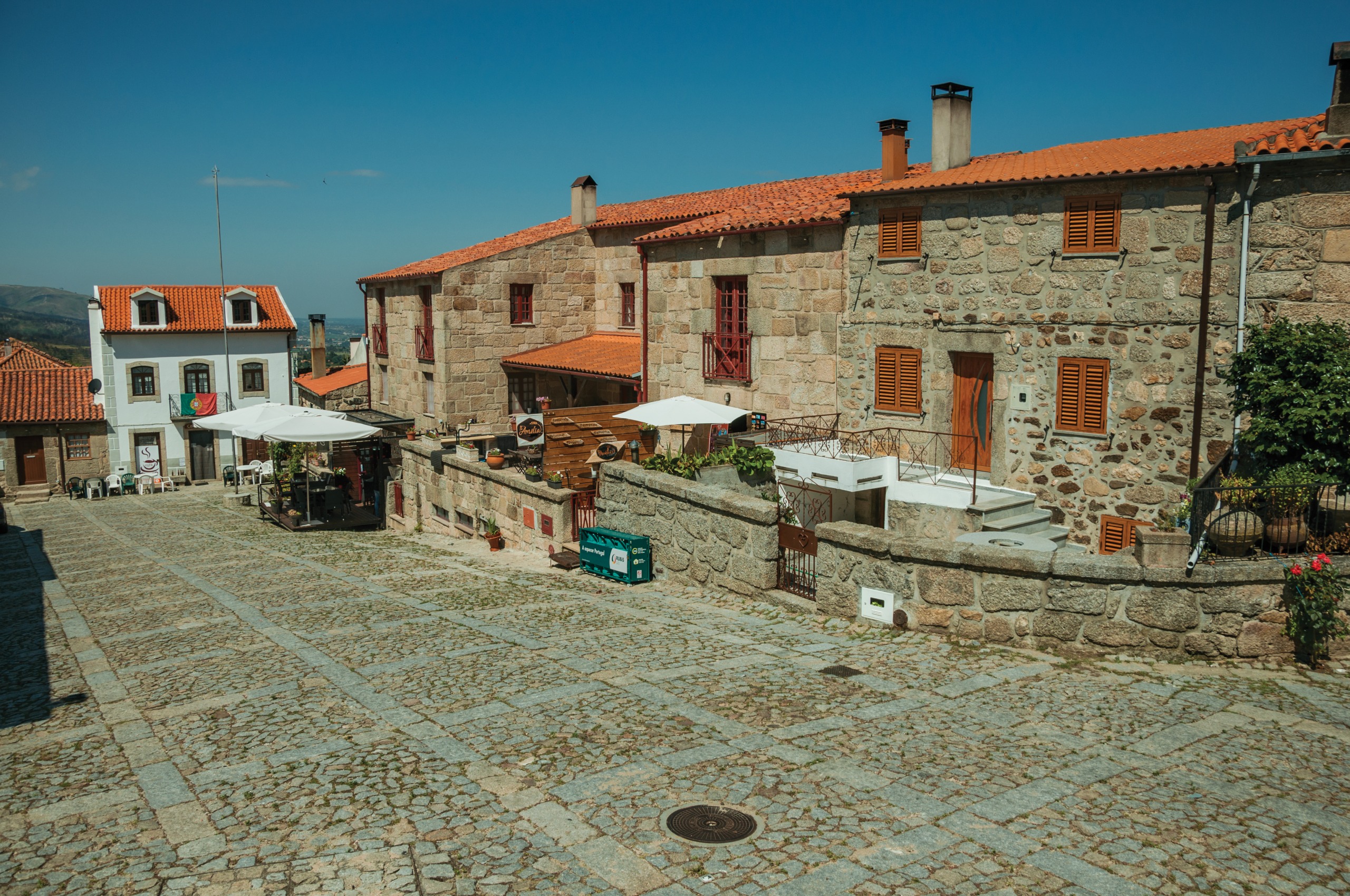
Tavira, Olhão and Faro constitute the so-called "sotavento" Algarve, under the wind. Tavira retains its four-sloped tesouro roofs inherited from Moorish influences, its Santa Maria do Castelo church, and an active fish market. Olhão, a cubic city of white terraced houses, revolves around its two 1916 brick market halls where sardines, tuna and clams flow. By contrast, the Albufeira-Vilamoura-Quarteira axis concentrates 1980–2000s beach resort urbanisation, which we avoid for travellers seeking a Portuguese experience over an international resort.
The interior shifts register entirely. The Serra do Caldeirão, schist and cork-oak wooded, preserves hamlets like Cachopo or Barranco do Velho where rural depopulation is visible. The Serra de Monchique, more humid, produces medronho brandy, a spirit distilled from arbutus berries that redden in autumn. Markets at Loulé (Saturday mornings) and São Brás de Alportel offer glimpses of this agricultural economy that coexists with coastal tourism without mixing.
Algarve gastronomy rests on three pillars: fish and shellfish (cataplana seafood stew, clam xerém, grilled sardines), citrus and dried fruits from the barrocal (dried figs from Moncarapacho, oranges from Silves), and mountain pork cuisine. Almond and fig pastries, doces de amêndoa e figo, inherited from the Islamic period, appear in every traditional bakery between Tavira and Lagos. The region was under Muslim rule from the 8th to 13th centuries, longer than anywhere else in Portugal, and this imprint remains legible in place names (Al-Gharb means "west" in Arabic), the architecture of pierced chimneys and certain irrigation techniques still visible at Silves, once capital of the taifa kingdom.
To Discover
Benagil Cave by kayak. Paddle 25 minutes from Benagil beach to enter the limestone cathedral opened by a natural oculus. Go at sunrise to avoid tour boats arriving from 10am onward.
Ria Formosa from Olhão. 15-minute public ferry crossing to Culatra or Armona, two barrier islands inhabited by fishermen where you walk barefoot between dunes and channels at low tide.
Rota Vicentina trail near Aljezur. The Pescadores section between Arrifana and Carrapateira hugs clifftops for 18 kilometres, exposed to Atlantic winds, with descents to roadless beaches.
Saturday market in Loulé. Beneath the 1908 neo-Moorish market hall, stalls of dried figs, mountain honey, goat cheese and Atlantic fish. Strategic retreat for coastal-based travellers.
Silves and its Almohad fortress. Former capital of Al-Gharb, dominated by an 11th-century red sandstone fortress. An interior town 15 kilometres from the coast, crossed by the Arade River navigable to Portimão.
When to Visit
We recommend April–June and September through early October. In May, air temperatures swing between 18 and 24 degrees, the sea reaches 18–19 degrees on the south coast, almond trees have bloomed since February but the countryside stays green. September offers 22-degree water and days still reaching 26–28 degrees without July–August crowds. July and August concentrate 70 per cent of annual visitors, accommodation prices double and iconic beaches (Marinha, Camilo) saturate by 10am.
Winter remains mild on the coast (15–17 degrees daily in January) but the sea drops to 15 degrees and many beach restaurants close November through March. The western coast (Sagres, Aljezur) stays windy year-round, expect 3 to 5 degrees cooler than the south coast and regular swell. The Serra de Monchique receives up to 1,000mm annual rainfall concentrated November through February, with occasional rare snow above 800 metres.
Practical Advice
We recommend a minimum of 4 nights to grasp the region, 6 to 7 nights if you want to combine the east coast (Tavira or Olhão), west coast (Sagres or Carrapateira) and a serra or Silves detour. Faro airport, served by numerous direct European flights, makes the obvious entry point. Internal distances stay short: Tavira to Sagres is 130 kilometres or 1 hour 45 minutes via the A22, and car rental remains essential for venturing beyond the coast.
The Algarve naturally combines with the Alentejo extending northward, one to two hours by road toward Mértola, Beja or the Alentejo coast (Vila Nova de Milfontes). A 12–15 day loop linking Lisbon, the Alentejo and the Algarve works well for a first Portugal trip. The region particularly suits families (sheltered south-coast beaches, short distances), coastal hikers via the Rota Vicentina, and contemplative travellers settling 4–5 nights at Tavira or a barrocal rural guesthouse. Hotel comfort levels run high, from renovated guest houses to west-coast design hotels.