Azores and Madeira
Two volcanic archipelagos in the middle of the Atlantic: calderas and fumaroles in the Azores, levadas and laurel forests in Madeira, 1.5 hours by plane from Lisbon.
The Azores and Madeira form Portugal's Atlantic territory, two volcanic archipelagos separated from the mainland by more than 1000 kilometers of ocean. Our team treats them as a destination in their own right, with distinct logistics, rhythm, and character. The Azores comprise nine islands spread across three groups; Madeira consists of a main island and Porto Santo, 2.5 hours apart by boat. Relief, climate, and vegetation differ radically from the peninsula, and between the two archipelagos themselves.
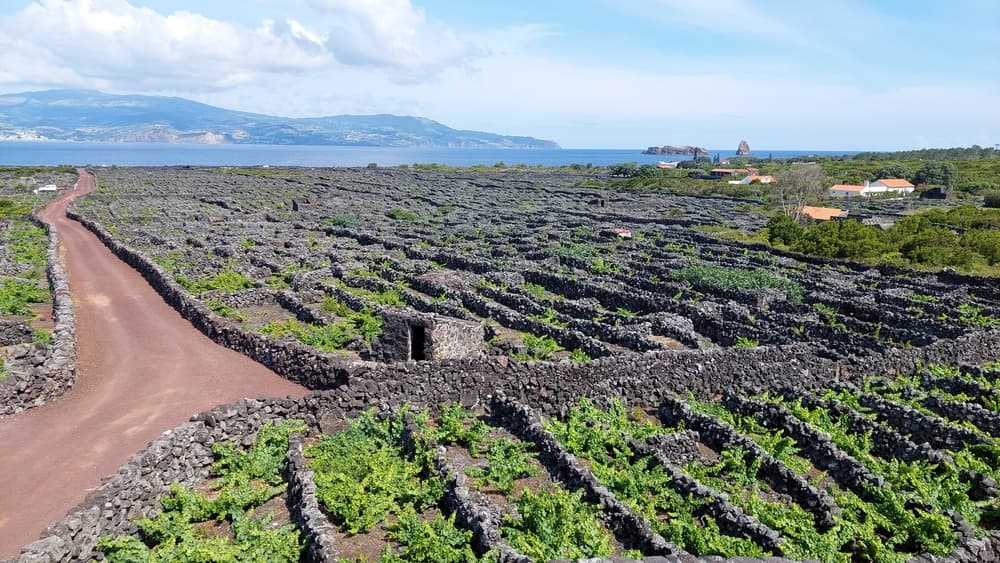
São Miguel concentrates the classic image of the Azores: the Sete Cidades caldera with its twin lakes at 500 meters altitude, the fumaroles of Furnas where families still deposit their pot of cozido das Furnas each morning into holes heated to 90 degrees by geothermal activity, the hot springs of Terra Nostra tinged with iron oxide. Pico, the second island, revolves around its 2351-meter volcano, Portugal's highest peak, and its UNESCO-listed vineyards, where vines grow in enclosures of black stone facing the wind. Faial, São Jorge, and Terceira complete the central group, accessible by inter-island ferries in summer. Flores and Corvo, at the far west, remain the most isolated and wettest, with an unusual density of waterfalls across small perimeters.
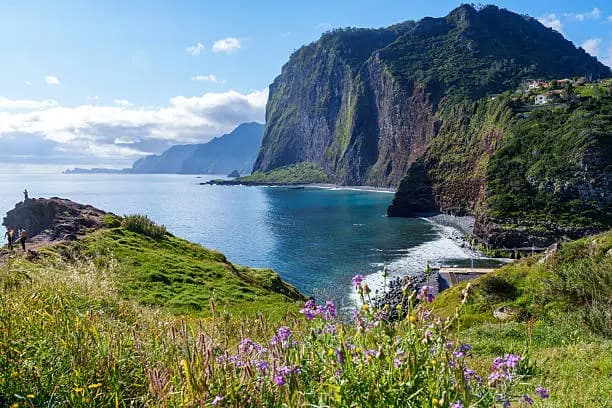
Madeira offers an entirely different landscape. The island, stretching 57 kilometers, is entirely mountainous: Pico Ruivo peaks at 1862 meters and the north coast plunges to the ocean in cliffs 500 to 700 meters high. Funchal, the capital, is home to approximately 110,000 residents and concentrates the international airport, hotels, and cruise port. It's our most straightforward logistical base. The levadas network, irrigation channels carved since the 15th century to channel water from the humid north to the cultivated south, totals over 2000 kilometers of marked paths. Some stretches skirt precipices with handrails, others cross the laurissilva, an endemic primary forest also UNESCO-listed.
Culturally, Azoreans nurture an island identity shaped by emigration to North America, evident in cuisine and religious celebrations like the Festas do Espírito Santo between May and July, where each parish freely distributes soup and meat. Local gastronomy rests on fresh fish, beef from Terceira and São Jorge pastures, aged São Jorge cheese from cave cellars, pineapples from São Miguel grown under glass. Madeira, meanwhile, centers on its fortified wine of the same name, aged in casks exposed to heat, on espetada (beef skewers grilled on laurel branches), on bolo do caco with garlic butter. Funchal also boasts a central market, the Mercado dos Lavradores, and a cable car connecting the city to Monte, where you descend in a wicker cart guided by two carreiros.
Cetacean watching stands as one of the Azores' major draws: 28 species frequent the zone, including sperm whales year-round and blue whales during their April-to-June migration. Outings depart from Ponta Delgada, Lajes do Pico, or Horta. Madeira also offers outings but with lesser diversity. Diving enthusiasts will find clear waters on both archipelagos, between 17 and 24 degrees depending on season, with sites for mobula rays and groupers.
Must-See
Cozido das Furnas, São Miguel. Meal cooked for six hours in volcanic soil beside Furnas lake. Visitors witness pot excavation late morning, then lunch in a village restaurant.
Levada do Caldeirão Verde, Madeira. 13-kilometer round-trip through laurel forest on the island's north, with four tunnels to traverse head-on, ending at a waterfall in a rocky cirque. Plan for 5 hours of hiking.
Climbing Pico, Azores. A 2351-meter volcano scaled in 6 to 8 hours round-trip from Casa da Montanha. Mandatory departure with registration and GPS beacon. Views of neighboring Faial and São Jorge islands on clear days.
Sperm whales off Lajes do Pico. Three-hour outings with a former whaling village converted into a modern operation, where land-based spotter towers still sight blowholes from the cliff and guide boats by radio.
Pico's vineyards and black stone lajidos. Vineyard parcels ringed by basalt walls protecting vines from wind and salt spray. Tasting of dry Verdelho in cooperative cellars at Madalena or Criação Velha.
When to Go
The temperate oceanic climate moderates both archipelagos year-round, with temperatures oscillating between 14 and 17 degrees in winter and 22 to 26 degrees in summer. The best window for hiking and marine observation runs from May to September, with calmer seas and clearer visibility on peaks. July and August remain the driest and most visited months; we recommend June and September instead to avoid saturated hotels in Funchal and Ponta Delgada.
From October to March, the Azores receive most precipitation, with 150 to 200 mm per month on São Miguel and more on Flores. Levada trails in Madeira may close after heavy rains due to rockfall risk. Altitude matters greatly: it can be 22 degrees in Funchal and 8 degrees at Pico Ruivo the same day. On Pico volcano, snow falls certain years between January and March. Whatever the season, we recommend three layers including a waterproof windbreaker and proper hiking shoes.
Practical Advice
Madeira can be comfortably visited in 5 to 7 days from Funchal, radiating by rental car over short but winding roads (allow 1.5 hours to traverse the island north-south). For the Azores, we advise a minimum of 7 days on a single island, preferably São Miguel for a first approach, or 10 to 12 days combining two islands using SATA inter-island flights (30 to 50 minutes airtime). Attempting three islands in under 10 days amounts to spending your time in airports.
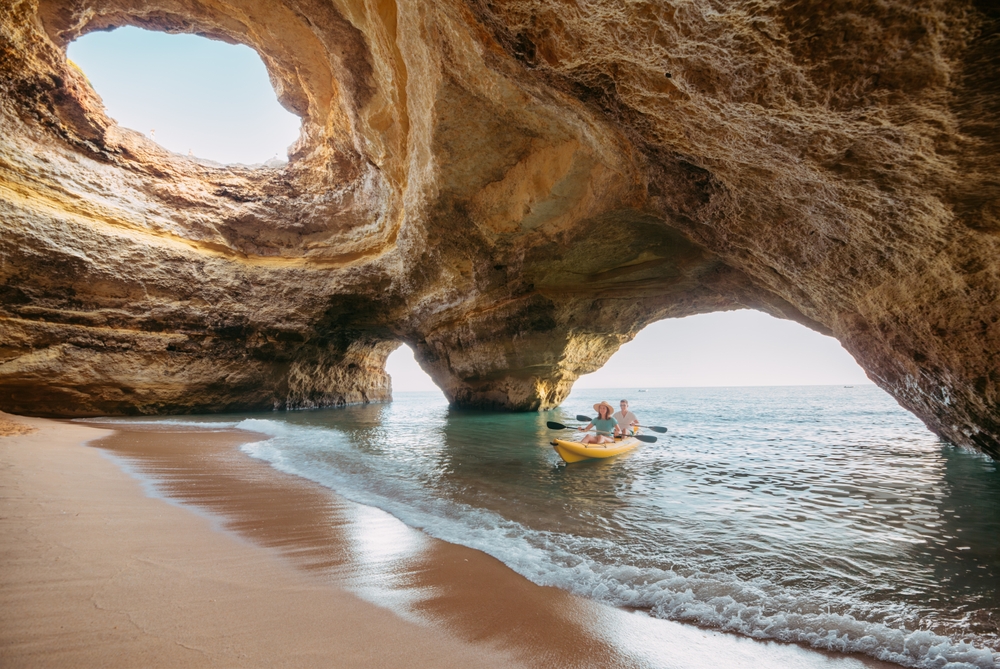
The two archipelagos rarely combine due to lack of regular direct flights: you must return via Lisbon. They integrate well, however, as extensions to stays in Lisbon and Sintra or Porto and the Douro, with a flight of 1.5 to 2.5 hours. The destination suits hikers, nature and wildlife enthusiasts, contemplatives who accept changeable weather. Families with children: Madeira is simpler logistically, São Miguel offers more varied activities (hot springs, pineapples, lakes). Travelers seeking sandy beaches and guaranteed warmth are better served in the Algarve.