Costa Nova
Costa Nova
Coastal village in Aveiro district famous for its colorful striped palheiros, dune-lined beach, and proximity to Farol da Barra lighthouse.
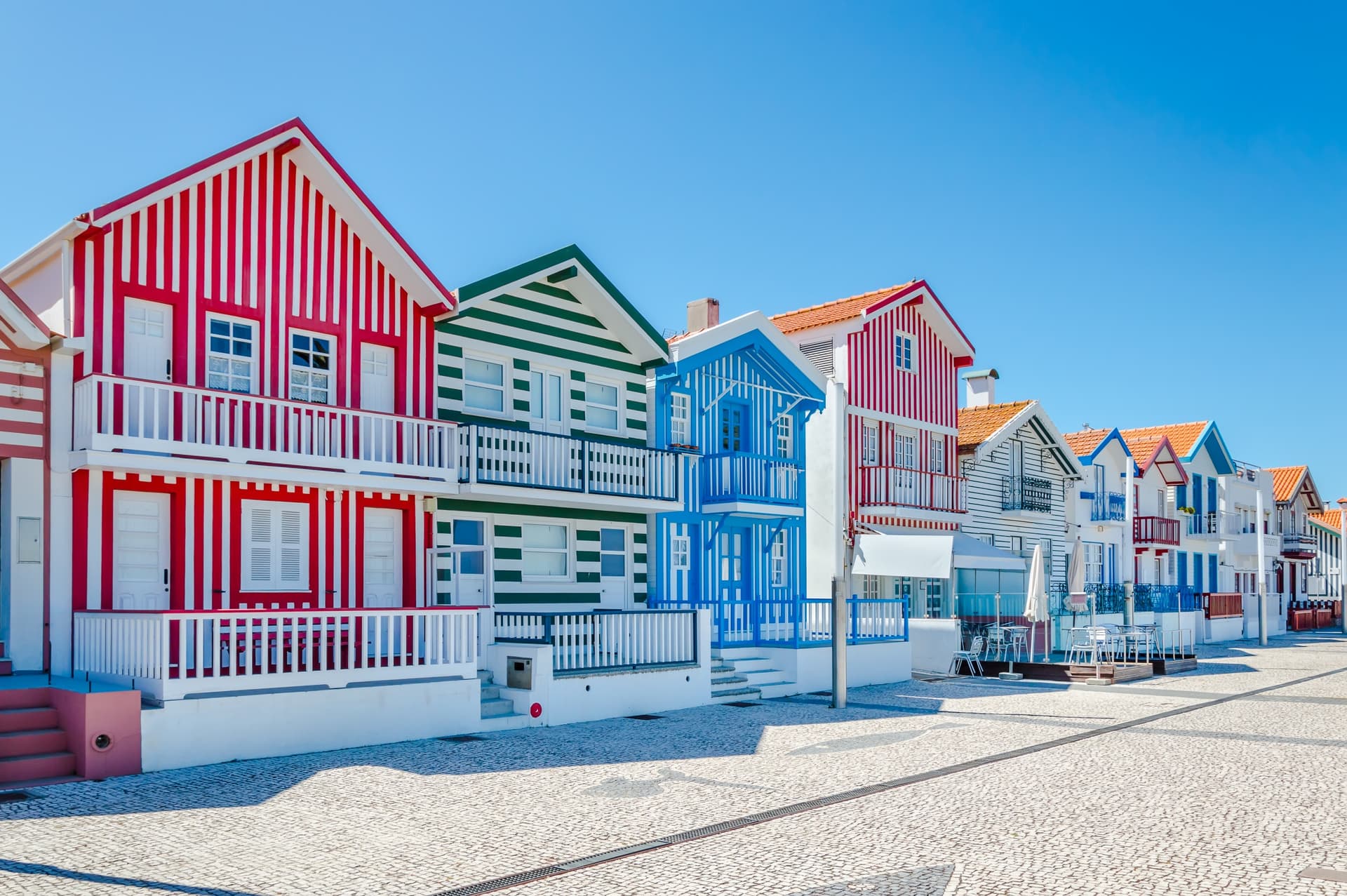
Costa Nova is a coastal village in Aveiro district, on the west coast of Portugal. It is instantly recognizable by its palheiros, wooden houses painted in alternating red, blue, or green and white stripes, which line the waterfront. Beyond this striking visual identity, the site combines an Atlantic beach, a fish market, and easy access from Aveiro.
Why visit Costa Nova
Costa Nova offers a coastal stop that differs from the busier beach destinations in southern Portugal. The village retains a fishing identity, evident in its striped architecture and an active fish market. The wide beach, open to the Atlantic, draws surfers and walkers alike, while Farol da Barra, one of Portugal's tallest lighthouses, marks the horizon to the north. With Aveiro just ten kilometers away, it makes for an easy half-day to full-day excursion.
History of Costa Nova
The locality was founded by fishermen in the early nineteenth century, who settled there for easier access to the sea. In 1808, the opening of the Ria of Aveiro mouth altered the coastal configuration, and it was then that the name "Costa Nova" was adopted to distinguish the site from the nearby San Jacinto beach.
The earliest structures were boat sheds built on stilts designed to shelter fishing boats and equipment. Their plank walls were painted in bright red striped with white, both to protect the wood from salt and to make the buildings visible from the sea. Over time, some fishermen converted these sheds into summer residences for their families, giving rise to the palheiros we see today.
What to see and do in Costa Nova
The Palheiros
These are the village's most photographed buildings. Former fishermen's houses built on stilts, they are now converted into private residences, seasonal rentals, and small hotels. The colorful vertical stripes on a white background stretch for several hundred meters along the main street facing the sea.
Costa Nova do Prado Beach
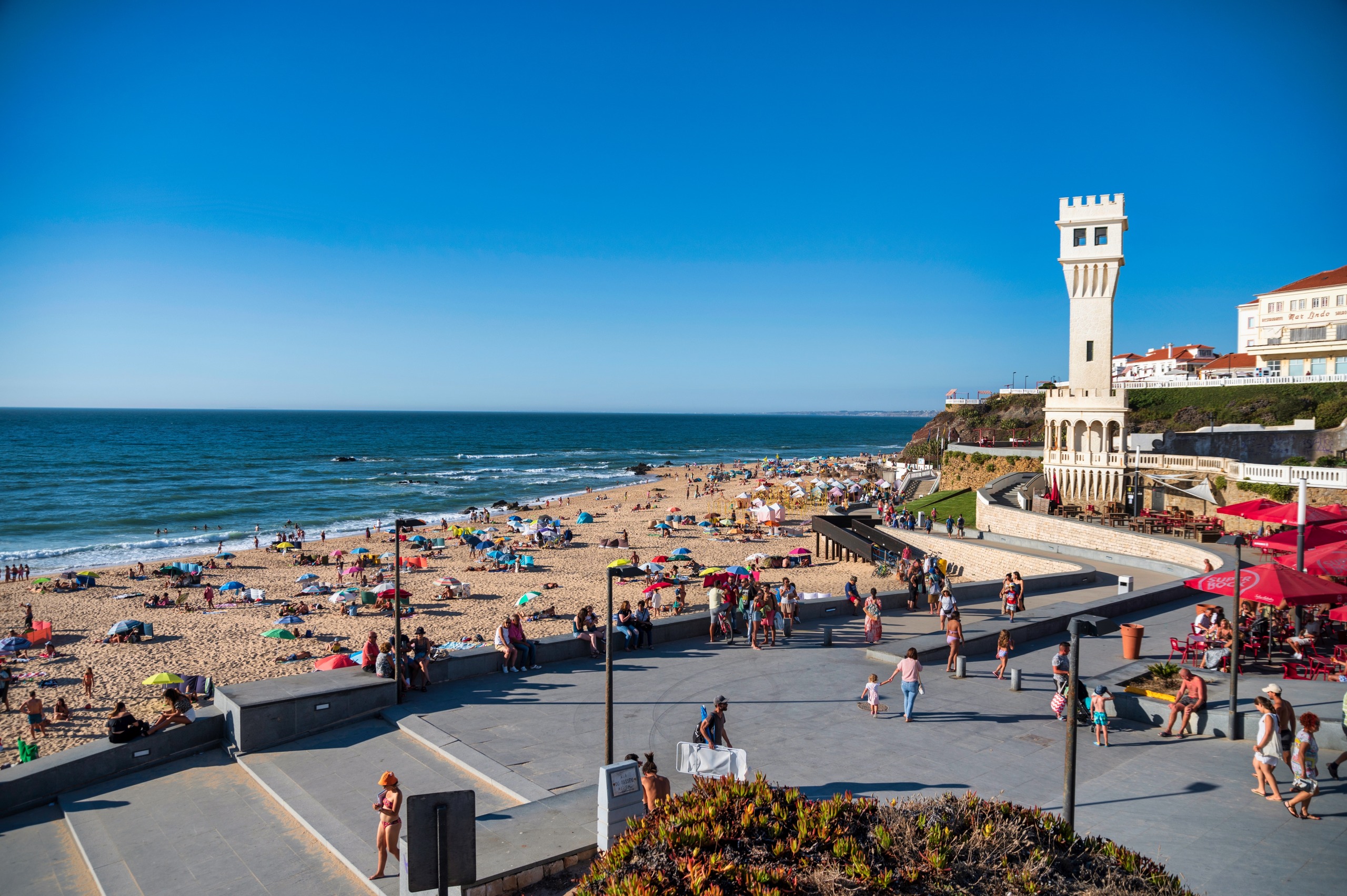
The village beach stretches along a long ribbon of sand bordered by dunes. A wooden boardwalk allows you to walk along the coast without damaging the dune vegetation. The Atlantic here is robust, with regular waves and cool water even in summer.
The Fish Market
Costa Nova's fish market sells the daily catch: whole fish, shellfish, and crustaceans. Several stalls offer fresh seafood to eat on-site or take away, making it a great option for a simple, fresh lunch.
Praia da Barra and Farol da Barra
North of Costa Nova, Praia da Barra is one of the region's premier spots for bodyboarding, kitesurfing, surfing, and sailing. The Farol da Barra lighthouse that overlooks it is one of Portugal's tallest: 66 meters high with 288 steps to the top. Visits are possible but limited to a few hours per week; it's best to check opening times locally before making the climb.
Practical Information
- Duration: allow 2 to 4 hours for the village, a half-day to a full day if you include Barra beach and the lighthouse.
- Beach access: free, with wooden boardwalks to cross the dunes.
- Dining: seafood restaurants concentrated near the fish market and around Praia da Barra.
- Parking: free parking away from the waterfront, busier in summer.
When to Visit
Late spring and early autumn offer the most pleasant conditions, with mild temperatures and moderate crowds. Summer remains the liveliest season but also the busiest, particularly in July and August. In winter, the village quiets down and the coast takes on a wilder character, interesting for walkers but less suitable for swimming.
How to Reach Costa Nova
Costa Nova is accessible from Aveiro, which is the logical entry point. Several options are available:
- Bus: regular services from central Aveiro, the most economical option.
- Taxi or ride-hailing: quick journey, convenient if traveling with others.
- Car: direct access via the coastal road, with on-site parking.
Aveiro itself is connected to Lisbon and Porto by direct train, making it easy to organize a day trip from either city.
Nearby
Aveiro, nicknamed the "Portuguese Venice" for its canals and moliceiros boats, deserves a combined visit. Further north, San Jacinto provides access to the natural dune reserve of the same name. To extend cultural exploration of the region, several Portuguese museums are worth visiting, such as the Museum of City History or the Museu do Caramulo dedicated to vintage automobiles. Craft enthusiasts will appreciate the Burel Factory in Serra da Estrela, and wine lovers the Museum of Bread and Wine in Favaios.
Frequently Asked Questions
Frequently asked questions
To integrate Costa Nova and the Aveiro region into a broader itinerary, consult our Portugal tours.
Interested in this visit?
We can include it in your personalised itinerary.