Driving in Portugal: what are the rules to know
Driving in Portugal is a way to explore the country freely. However, depending on your itinerary (road trip through the countryside, long distances on the motorway network, etc.),
Driving in Portugal is a way to explore the country freely. However, depending on your itinerary (road trip through the countryside, long distances on the motorway network, etc.), you must take into account the state of the roads, traffic and toll systems… Discover the 4 rules to follow for successful journeys!
Rule 1: have the right driving license to drive in Portugal
For European Union citizens, a national driving license is sufficient to drive in Portugal. If you wish to rent a vehicle once there, note that the driver must be at least 21 years old and have held their license for a minimum of one year.
Rule 2: understand the types of roads in Portugal
The motorway (AE)
The Portuguese motorway network includes two types of motorways (auto estrada). Traditional toll roads (ticket-based) and electronic toll roads (box/virtual card). The speed limit is 120-140 km/h in both cases.
To make your choice, you will need to take into account the length of your stay and the specific features of your vehicle (rental or personal? Equipped or not with a box?).
Secondary roads (IP, IC, EN)
Principal routes (IP)
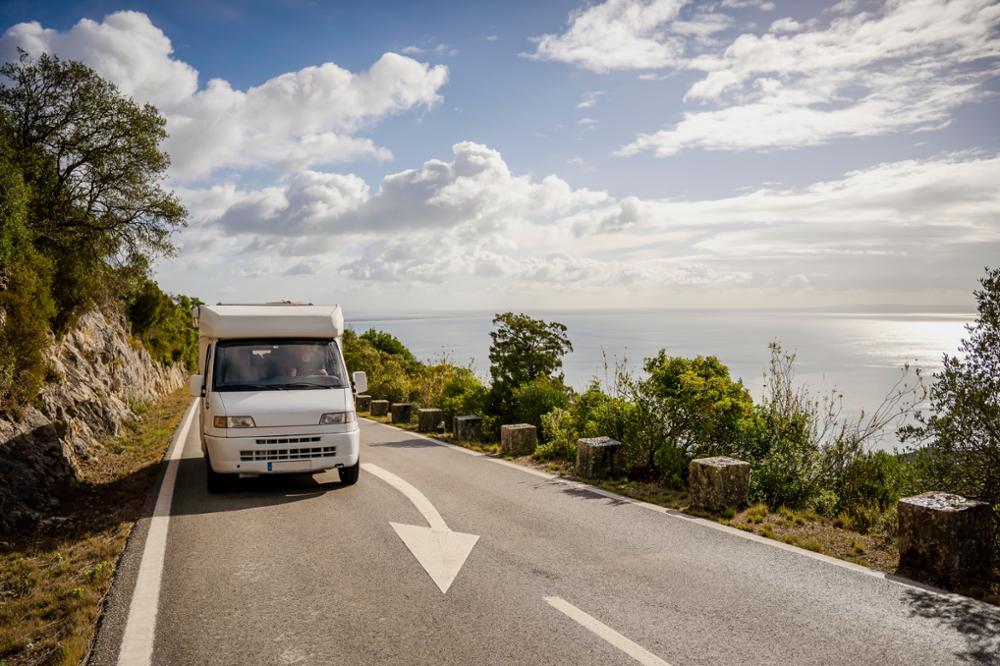
Principal routes (itinerário principal) are fast-moving roads, with speed limits of 90-100 km/h. Well-maintained, they are useful for traveling between regions, as they have no tolls.
Complementary routes (IC)
Complementary routes (itinerário complementar) connect more remote regions of Portugal. Roads are often divided into two lanes and have a speed limit of 90 km/h.
National roads (EN)
National roads (estrada nacional) are ideal for discovering the countryside and its picturesque landscapes. Note that these may be winding and more or less well-maintained. Their speed limits vary (between 50 and 90 km/h).
Good to know Many Portuguese prefer 'alternative routes' to motorways – considered too expensive. As a result, secondary roads are often congested (and therefore not recommended for long distances). |
Rule 3: choose the appropriate toll system for your journeys
Traditional manual toll system
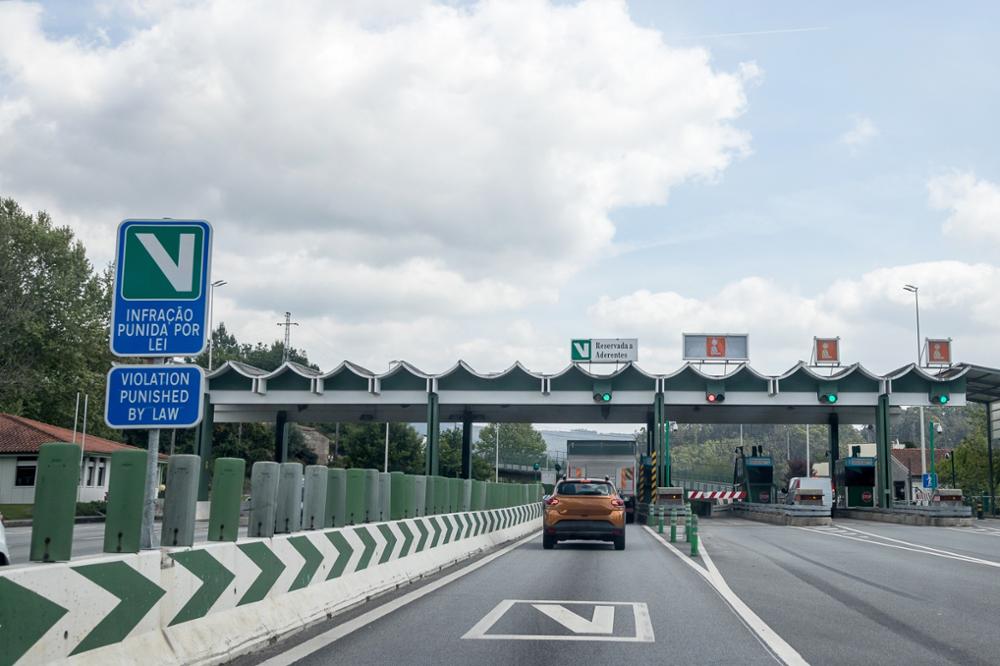
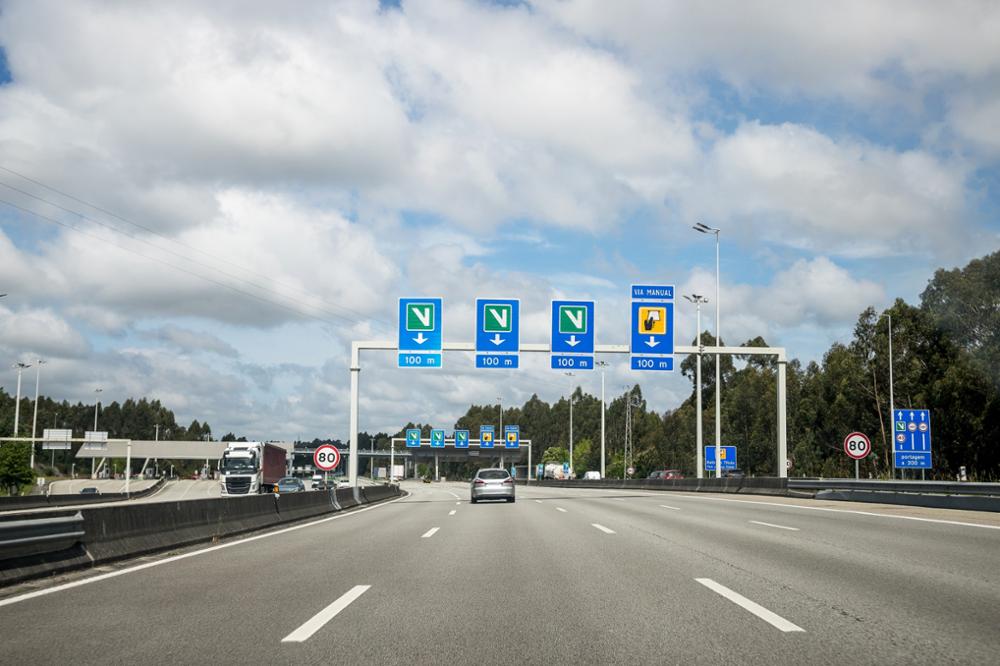
Traditional tolls are equipped with barriers and marked by a sign « Portagem toll ». Journeys can be paid for in cash or by bank card. One tip? Always have cash on you, as ATMs don't always read foreign cards…
Electronic toll system
To use electronic toll motorways, you must first subscribe to a plan.
Easy Toll
Easytoll is a system that links your license plate to your credit/debit card (Visa, Mastercard, Maestro). Each time you pass, toll fees are automatically deducted from your bank card. This system is only valid for 30 days.
How to subscribe? Visit one of the terminals located at the four entry points to Portugal:
- A28: Viana do Castelo service area;
- A24: 3.5 km from the Chaves/Verin border;
- A25: Alto de Leomil service area;
- A22: next to the Castro Marim / Ayamonte border.
Practical information Cost: €0.74 subscription + €0.32 processing fee (per journey). If you leave the country within 30 days, you can cancel your subscription via the national motorway network website PortugalTolls. Usage: the subscription is activated upon your first passage at an automated booth (the subscription receipt, showing the expiration date, must be kept). |
TollCard (CTT Postal Service)
TollCard is a prepaid toll system (€5, €10, €20 or €40) accessible via the CTT website or directly at a CTT post office.
Practical information Cost: €0.74 subscription + €0.32 processing fee (per journey). Usage: after activation, you must keep the receipt on your smartphone. If you don't use your card (valid for 1 year), you can request a refund at a post office. You can also check your balance on the CTT website. |
3-day virtual card or Multi-journey
The 3-day virtual card is available on the portugaltolls website or at CTT post offices. There is also a Multi-journey virtual toll card, useful for predefined routes (connections to the airports of Porto and Faro).
Practical information Cost: €0.74 subscription + a fixed cost of €20 Access: available for vehicles of class 1 and 2 (including motorcycles) Usage: unlimited access to the electronic motorway network. The virtual card is linked to the license plate; toll fees are deducted directly from your bank card. |
ViaVerde Visitors
With this electronic toll system, the vehicle is equipped with a box that allows you to travel on the entire motorway network (electronic tolls or traditional tolled barriers) – and therefore never have to stop. Once the equipment is ordered on the ViaVerde visitors website, toll fees are deducted from your bank card.
Practical information Cost: the first month costs €4.99 (box purchase, membership fees included), then €1.35 per month used (in addition to toll fees). Box: it can be sent to your home or directly to your accommodation/hotel address (allow 15 days for delivery). The box can also be rented for 90 days (€6 the first month, then €1.50/month). Usage: all electronic tolls |
Fulli Nomade +
The Fulli Nomade + card is a European payment system that allows you to use motorways in several EU countries, including France and Portugal. Its operation is similar to the ViaVerde system, as it allows you to pay without stopping, using a badge.
Practical information Cost: €11 subscription fee, then €2.40 per journey in Portugal (€1.70/journey in France). Badge: €4 shipping fee (valid for 30 days). Usage: payment is automatic upon your passage. The badge also gives you preferential prices at certain motorway service areas and petrol stations. |
If you rent a car, the vehicle may not be equipped with an electronic toll system. If you wish to use electronic toll roads, specify this to the rental company!
Rule 4: know the highway code and essential rules
The highway code and mandatory equipment
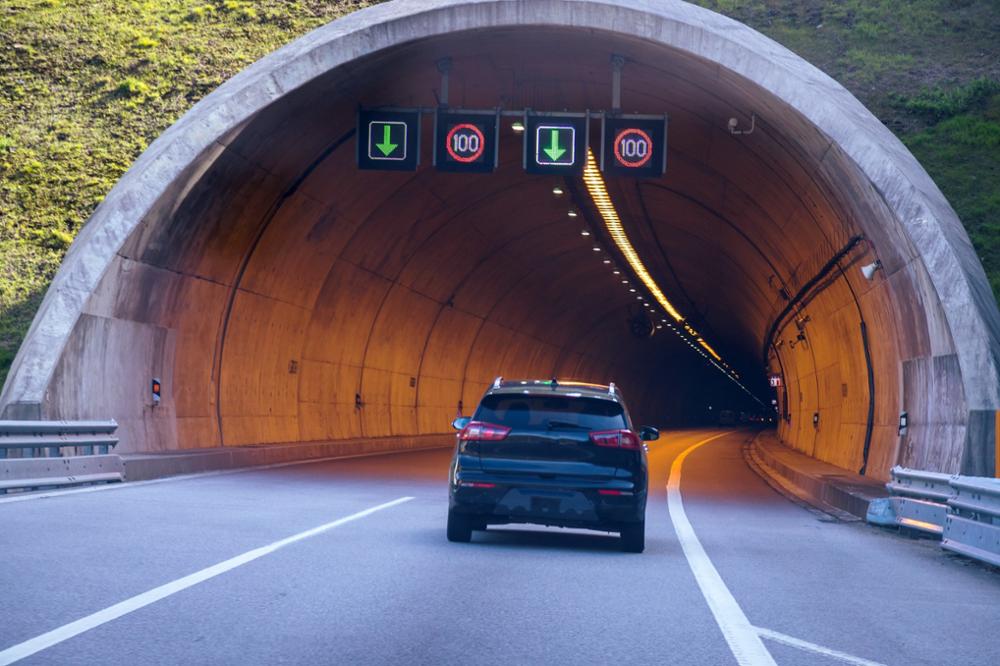
The Portuguese highway code is similar to the French code.
To drive safely, all vehicle passengers must wear seatbelts – and young children must sit in a booster seat. You must have a fluorescent vest (inside the vehicle, not in the trunk), as well as a warning triangle in case of an accident.
Be careful, as the Portuguese are known for driving fast (particularly in the evening, when leaving nightclubs and bars). Your blood alcohol level must be below 0.5 g/litre.
Road signs to know
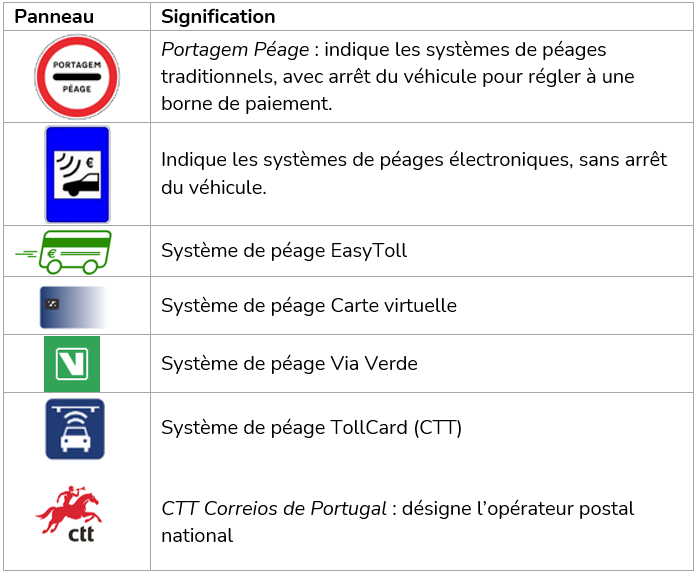
Tips to follow
On the A25 motorway (between Aveiro and Vila Formoso) it is mandatory to drive with dipped headlights on at all times, even in broad daylight, or face a fine.
If you accidentally use electronic toll roads without being equipped (and therefore without paying): go to the toll payment portal Pagamento de Portagens, to report your error – and pay your fine!
Frequently asked questions
No, if you are an EU citizen, your national driving license is sufficient to drive in Portugal. To rent a vehicle there, you must be at least 21 years old and have held your license for at least one year.
If you use a traditional toll motorway, you can pay in cash or by bank card at toll barriers. It is advisable to have cash with you, as booths don't always read foreign cards. For roads with exclusively electronic tolls, you must subscribe to a system such as Easy Toll, TollCard or ViaVerde before using them.
For a stay of less than 30 days, Easy Toll is the simplest solution: simply register at one of the 4 entry points to Portugal and your toll fees are deducted directly from your bank card. The 3-day virtual card is also a good option for a short getaway.
In Portugal, the legal blood alcohol limit is 0.5 g/litre, the same as France. If you exceed this, you face fines and penalties that can include driving license suspension.
Yes, but be aware that on the A25 (between Aveiro and Vila Formoso), it is mandatory to drive with dipped headlights on at all times, including in broad daylight. Failure to comply with this rule is subject to a fine.
If you accidentally use an electronic toll road without equipment, go to the Pagamento de Portagens portal (online toll payment). You can report your passage and regularize your situation by paying the toll fees due, avoiding additional fines.