Surfing in Portugal: Must-See Breaks
With nearly 850 km of coastline pounded by Atlantic swell, Portugal ranks among the world's most iconic surf destinations.
With nearly 850 km of coastline pounded by Atlantic swell, Portugal ranks among the world's most iconic surf destinations. It's even said that with its exceptional climate, you can surf 365 days a year. But then, what are the best surf spots in Portugal for both beginners and experienced surfers? Read on to discover.
Praia do Norte - Nazaré
We couldn't start this list without mentioning what surfers call the Mecca of surfing: Praia do Norte in Nazaré. It's renowned for hosting some of the world's largest waves, thanks to an underwater canyon off the coast.
This makes Nazaré a major hub for international surf competitions. It gained worldwide fame through surfer Garrett McNamara, who entered the Guinness World Records in 2011 after riding the largest wave in the world at that time (24 m). Since then, other surfers like Benjamin Sanchis and Justine Dupont have also set historic records here.
As you can imagine, with its giant waves (especially in winter) and titanium swell, Nazaré is reserved exclusively for professional and experienced surfers. However, nothing stops you from enjoying the spectacle before heading to one of Portugal's more beginner-friendly surf spots.
Peniche (Supertubos, Molhe Leste, Praia do Cero...)

A historic city and Portugal's premier fishing port, Peniche is regarded as one of the best surf spots in Portugal, if not all of Europe. Due to its geographic position at the tip of a peninsula surrounded by ocean, you can surf here year-round. Moreover, Peniche's beaches benefit from offshore winds, creating excellent surfing conditions. The city hosts ASP World Tour competitions annually.
Among Peniche's top surf spots are:
Supertubos: nicknamed the "European Pipeline" by purists for its tubular waves, this break is better suited for experienced surfers.
Molhe Leste: known for its point break, where waves consistently peel at the same location.
Banana beach: the ideal spot to practice barrel riding.
Praia do Cero: located in the bay north of Peniche, this break offers left or right beach break conditions. It's the perfect place to learn with an instructor or refine your technique.
Ericeira (Coxos, Foz do Lizandro, Ribeira D'Ilhas...)

Located on Portugal's west coast, approximately 50 km north of Lisbon, Ericeira is among the country's premier surf spots. It hosts numerous world championships annually, including the World Surf League Tour and Quick Silver Pro Portugal. Dubbed "Ericeira World Surfing Reserve," its 8 km coastline offers multiple breaks renowned for diverse waves where you can surf year-round at any level.
The most popular Ericeira surf breaks include:
Coxos: the most frequented bay spot for seasoned surfers. Expect tubular, steep, hollow, powerful waves!
Foz do Lizandro: situated at the mouth of the Rio Lizandro river, this break offers excellent surf conditions.
Ribeira D'Ilhas: surrounded by cliffs and sheltered from winds, this spot provides long righthanders.
Sao Lourenço: this reef break delivers both lefts and rights. The spot suits intermediate, advanced, and expert surfers.
Praia de Carcavelos - Lisbon

Located 24 km from Lisbon and easily accessible, Carcavelos beach is one of the capital's most popular beaches. It's also an excellent spot for beginners learning to surf. The reason: beach break waves. As you've gathered, Praia de Carcavelos is ideal for surfing near Lisbon. Given the area's popularity, we recommend arriving early in the morning.
Praia da Arrifana – Aljezur

Located on the Vicentine coast near the village of Aljezur, in western Portugal and the Algarve region, Arrifana beach captivates with its wild setting. Surrounded by cliffs, the bay is sheltered from winds, providing consistent swell.
You'll find various wave types: beach breaks (perfect for beginners) and point break along rocky outcrops. Plus, Praia da Arrifana suits all surf levels and proves ideal for riding waves amidst unspoiled nature. Take advantage of your getaway to explore Costa Vicentina Natural Park, one of Portugal's most beautiful national parks.
Figueira da Foz (Praia de Cabedelo, Buarcos...)

Beaches around Figueira da Foz are characterized by long stretches of white sand dotted with dunes. They offer an idyllic setting for surfing midway between Porto and Lisbon. Most importantly, they're renowned for hosting Europe's finest right-hand waves.
Top surf breaks in the area include:
Figueira da Foz: a beach break with fast, hollow, tubular waves.
Buarcos: home to Europe's longest wave, sometimes stretching over 200 m!
Praia da Cabedelo: famed for its fast, consistent beach break waves, it attracts surfers seeking wild vegetation as far as the eye can see and mellow waves. This windy coast also appeals to kitesurfers, bodyboarders, and windsurfers.
Praia do Espinho - Porto

Looking for a surf spot near Porto? Head to Espinho beach! Beyond being considered one of the region's most beautiful beaches, it's a highly sought spot for seasoned surfers. It requires experience here because of powerful beach break waves. Note that given wave intensity, a swimming basin has been built along the shore for safe bathing.
Praia de Amado and Praia da Bordeira - Carrapateira

Located at Portugal's southwestern tip, Carrapateira is a charming Algarve village hosting 2 must-see Portuguese surf breaks.
The first lies to the north: Bordeira beach, one of the Algarve's most beautiful beaches. This magnificent natural site offers consistent waves for year-round surfing. A point break marks the beach's southern end with beach break running the length of the shore. Though accessible to all levels, it's better suited for seasoned surfers in winter.
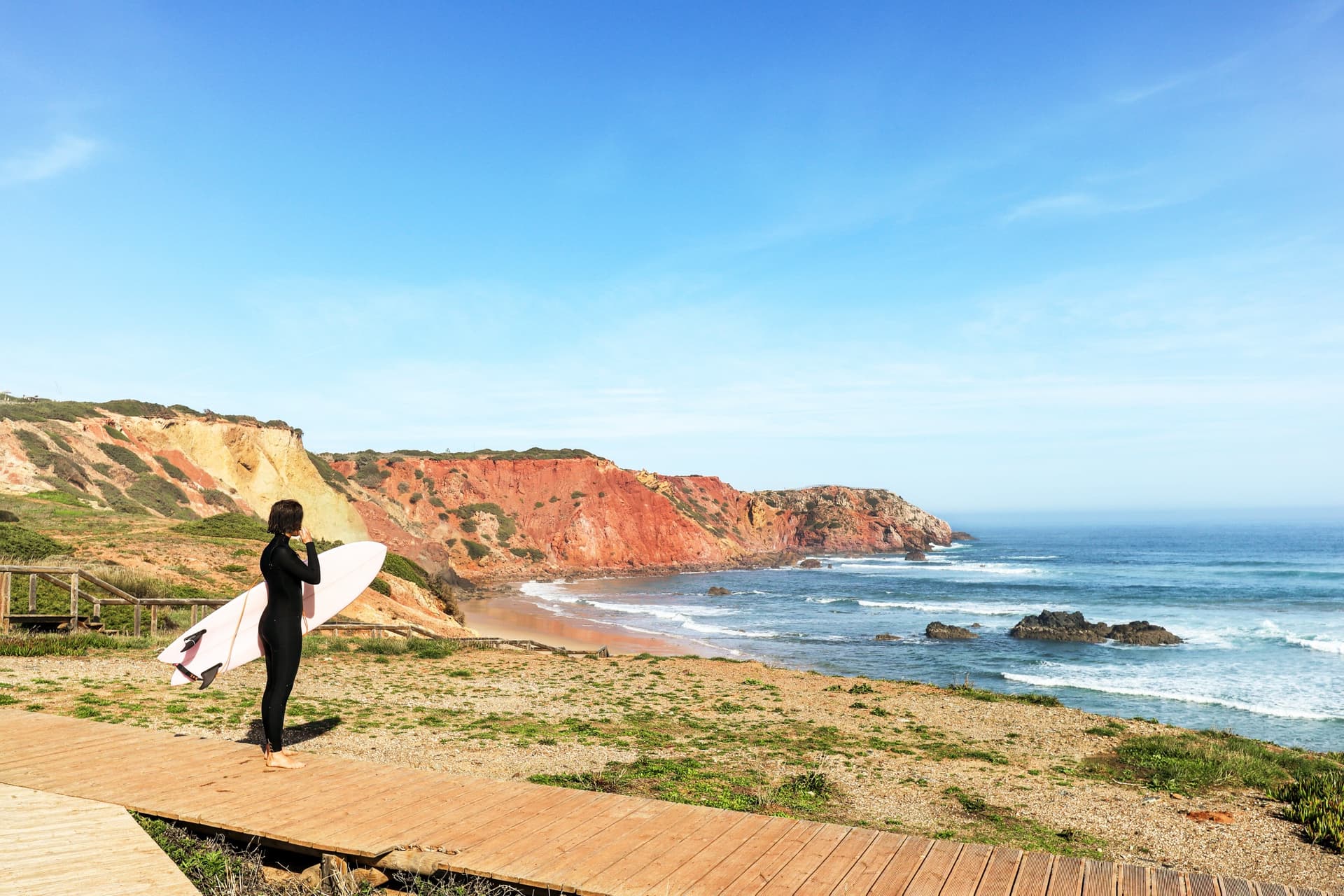
Carrapateira's second surf break lies south of the village: Amado beach. With strong currents and steep waves, Praia de Amado ranks among Portugal's premier surf spots. While hosting regular international competitions, it remains accessible to beginners, with several surf schools on site.
Sagres

Located in Faro district, Sagres is celebrated for exceptional natural landscapes. Ringed by cliffs, it features stunning wild beaches among the Algarve's finest. For surfers, the region guarantees year-round waves.
Top surf breaks around Sagres include:
Praia do Cordoama and Praia do Castelejo: these neighboring beaches deliver very strong waves year-round outside summer. These reef break and beach break spots suit all levels, though rocky bottoms discourage beginners.
Beliche: known for left-peeling waves and consistent swell, this break appeals to surfers of all levels.
Praia da Ingrina: offering waves that run long and clean, this break proves ideal for beginners.
Praia do Tonel: Sagres' flagship surf break, this long beach offers excellent variety and suits all levels.
Note that surfing isn't the only highlight of a Sagres visit. The town is also known for historic treasures (like Cape Saint-Vincent and Sagres Fortress). It's also one of Portugal's premier diving sites and departure point for dolphin and whale-watching boat excursions. It's ideal for traveling to Portugal with children!
Practical Information:When is the best time to surf in Portugal?With mild temperatures year-round and low rainfall, Portugal's climate allows surfing every season. Still, distinct seasons help define the best time based on skill level:
What's the water temperature?Water temperature varies significantly from north to south. In the northern region, water can drop below 13°C in winter and rarely exceeds 20°C in summer. In the southern region, the Algarve, water ranges from 17°C in winter to 22°C in summer. To stay warm, pack appropriate wetsuits seasonally (4/3mm for winter, 3/2mm for summer). Where can beginners surf in Portugal?The best place to learn surfing in Portugal is the Algarve. Its geographic position shelters it from Atlantic swell. Waves are gentle and consistent, especially spring and summer. Along the entire coast, you'll easily find surf schools to get started!
|
Frequently asked questions
For beginners, Portugal's top surf breaks are in the Algarve: Praia de Amado (Carrapateira), Praia da Ingrina (Sagres), and Praia da Arrifana (Aljezur). Farther north, Praia de Carcavelos near Lisbon and Praia do Cero in Peniche also work well for learning, thanks to gentle beach break waves and available surf schools.
Autumn (September to November) is considered Portugal's best surf season, with solid swell and pleasant weather. Winter (December to February) delivers the largest waves, perfect for experienced surfers. Spring and summer (March to August) suit beginners better with smaller, regular waves.
Yes, a wetsuit is recommended for surfing in Portugal year-round. In winter, choose a 4/3mm suit, or thicker in the north where water drops below 13°C. In summer, a 3/2mm typically suffices. In the south (Algarve), water is slightly warmer, ranging from 17°C in winter to 22°C in summer.
No, Nazaré (Praia do Norte) is exclusively for professional and highly experienced surfers. It hosts some of the world's largest waves—over 24 meters—thanks to an offshore underwater canyon. However, you're welcome to watch the spectacle from the beach or cliffs before heading to a break suited to your level.
Renting a car is most convenient for exploring Portugal's various surf spots, especially along the west coast and Algarve. Car rental is available in major cities (Lisbon, Porto, Faro). For breaks near Lisbon like Carcavelos, the suburban rail line (Linha de Cascais) offers a budget-friendly, quick option.