Portuguese wine: a journey through Portugal's vineyards
Thanks to its diverse landscapes and climate, Portugal is home to numerous wine regions producing excellent wines.
Thanks to its diverse landscapes and climate, Portugal is home to numerous wine regions producing excellent wines. In total, the territory contains more than 250 different grape varieties, including over 80 varieties of indigenous grapes. But then, what are the main wine regions of Portugal? How can you discover Portuguese wine during a stay? Discover our tips for exploring Portugal's vineyards.
Did you know?
The history of viticulture in Portugal dates back to the 9th century BC according to archaeologists. The inhabitants of the ancient kingdom of Tartessos, then the Phoenicians, were already cultivating vines there before the Greeks and Romans even arrived on the territory.
By bringing vines from their country of origin, these civilizations shaped the history of Portuguese wine and left the mark of their passage...
The main wine regions of Portugal
Do you want to travel the wine routes of Portugal and taste the emblematic wines of the country? Here are some of the main wine regions to discover in Portugal:
Douro Valley

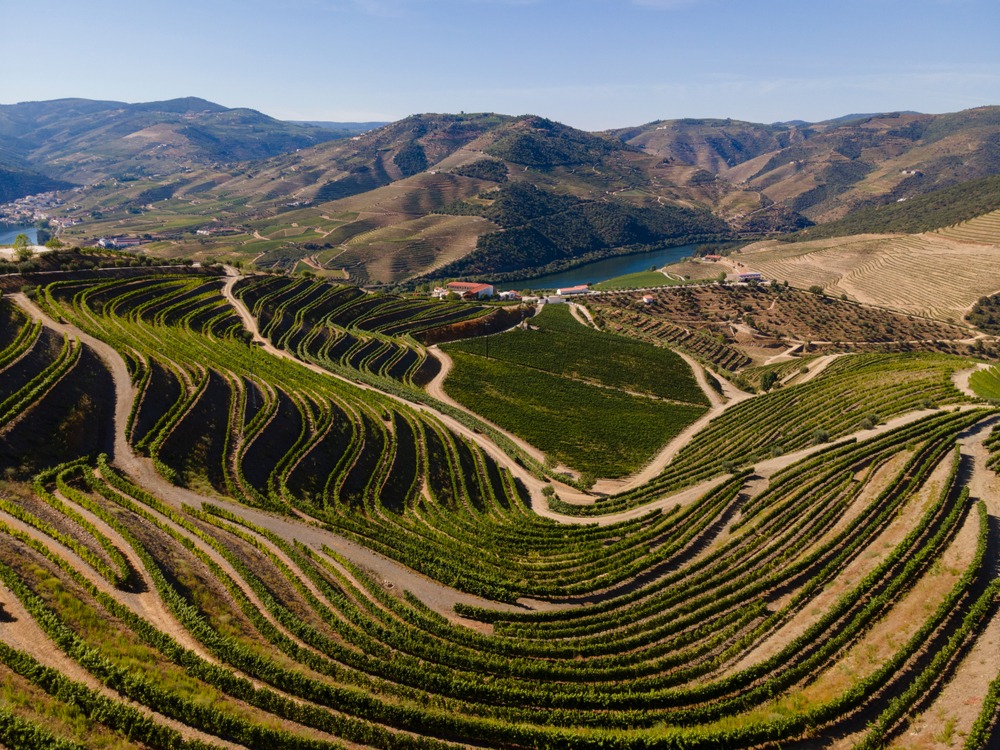
If there is one Portuguese wine region that is absolutely essential, it is the Douro Valley. Located in the north of the country, the region is renowned for its sublime terraced vineyards, its production of famous Port wine and its wine estates with ancestral expertise. The schistose soils and terraced vineyards allow grapes to be cultivated in optimal conditions.
Vinho Verde (Minho)
Located in the north of the country, bordering Spain, this region takes its name from the different shades of green that dot the landscape. It produces a light, fresh and slightly acidic white wine (also found in red), considered the original wine of Portugal.
Dão

Protected from the wind by mountains, this wine region in the north-central part of the country is known for producing excellent wines with great aging potential, particularly reds. You will be able to taste full-bodied, aromatic and complex red wines as well as fruity and balanced white wines.
Trás-os-Montes
Here is another wine region located in the mountains (its name means "Beyond the mountains"). This sublime rugged region produces sweet white wines with floral aromas while the red wines are fruity and slightly astringent.
Bairrada

Located in the Center-West of the country, the Bairrada region produces white and red wines, made from traditional grape varieties such as Bical for white wines and Baga for red wines. It was also one of the first wine regions in Portugal to produce sparkling wine.
Tejo
Due to its river landscapes and topography, the Tejo wine region is among the most fertile regions in Portugal. You will find quality wines at reasonable prices. In addition to vineyards, the region is dotted with fruit and vegetable crops, olive groves and cork oaks.
Setúbal

Located on the Setúbal peninsula, in southern Portugal, the Setúbal wine region is considered the cradle of the first vine of the Iberian peninsula, planted approximately 4,000 years ago by the Tartessians. You will find an exceptional muscat here: the "Moscatel de Setúbal".
Alentejo

Located in southern Portugal, Alentejo covers most of the southern half of the country. Bathed in sunshine, this wine region with a hot and dry climate produces some of the best Portuguese wines, including ancient wines, such as Talha wines, a winemaking process established by the Romans over 2,000 years ago.
Other wine regions
Of course, there are other wine regions worth visiting in addition to this non-exhaustive selection. By way of examples, we can mention:
the Távora-Varosa wine region renowned for its sparkling wines among the most appreciated in the country;
the Valpaços wine region whose wines have similarities with those of Alentejo due to the warm climate that both regions experience;
The Bucelas wine region known for producing one of Portugal's most historic white wines;
the Lisboa wine region known for its famous Colares wine;
The Algarve wine region, a wine region long neglected that today inspires new generations of winemakers;
The Madeira wine region where fortified wine with complex aromas is produced;
the Azores wine region where vines have been cultivated since the 15th century...
What are Portugal's emblematic grape varieties?
Here are some of the most renowned grape varieties in Portugal for the production of white wines:
Alvarinho,
Arinto / Pedernã,
Antão Vaz,
Bical,
Chardonnay,
Côdega,
Encruzado,
Gouveio,
Loureiro,
Rabigato...
On the red wine side, the most appreciated grape varieties are:
Touriga Nacional,
Touriga Francesa,
Alfrocheiro,
Alicante Bouschet,
Aragonês / Aragonez / Tinta Roriz,
Baga,
Castelão,
Sousão / Vinhão,
Syrah,
Tinto Cão,
Trincadeira / Tinta Amarela...
Wine experiences to enjoy in Portugal
Do you not know where to go or how to discover Portugal's vineyards and taste Portuguese wine during your stay? To help you find inspiration, we present two wine experiences to enjoy in Portugal:
Guided tour discovering Portuguese wines of the Douro Valley

The Douro Valley is among the oldest and most beautiful wine regions in Portugal. If this is your first wine-focused trip to Portugal, this is where we recommend you stop.
Inscribed on the UNESCO World Heritage List for its outstanding universal value as a cultural landscape, this region characterized by steep landscapes is especially famous for its Port wine production. But you will also find excellent table wines made with the same grapes, namely Touriga Nacional, Tinta Barocca and Tinta Roriz.
Be that as it may, wine is made here using traditional techniques passed down from generation to generation, of which winemakers are the guardians of this ancestral expertise... You can still find, for example, stone presses for treading grapes underfoot, preserving centuries-old techniques for extracting must.
Far from large-scale operations, our Soprasi agency offers you the chance to immerse yourself in the Douro vineyards by experiencing authentic experiences in collaboration with small producers.
How would you like to take a guided and private 3-hour walk with our passionate local partner to discover the landscapes and traditions of the Douro Valley? An opportunity to learn more about the history, traditions and local customs while enjoying the sublime landscapes of the valley. During this excursion, you will also be able to visit a small family vineyard and taste the wines in the company of the winemakers.
Want to learn more? We offer you a private and guided wine experience with an oenologist during which you can learn all the secrets of the vineyards. On the program: discover how to differentiate grape varieties by their leaves, the color and taste of the grapes, taste the wines at different stages of maturation, learn more about traditional winemaking methods…
Need help planning your wine stay in Portugal? Or organizing a private visit to a local winemaker? We turn your wishes into reality! Thanks to our excellent knowledge of the terrain and our close relationships with winemakers, we can organize a tailor-made visit according to your wishes and budget!
Also discover all the things to do and see during a stay in the Douro Valley.
Participate in the harvest during a trip to Portugal
For an even more intense immersion into Portugal's wine heritage, why not participate in the harvest during a trip to Portugal?
This ritual, which marks the beginning of the wine production process, is one of the most striking traditions in the country. Each year, the harvest marks and symbolizes the power of collaboration and community.
As our partner local agency explains: " In Portugal's wine regions, families and neighbors gather to help with the work, transforming the harvest into a social celebration. The spirit of cooperation is palpable as participants work together in the vineyards, share stories and experiences, and enjoy traditional meals. Songs echo across the fields, adding a musical touch to the day of hard work, in an atmosphere of celebration and joy."
If you are interested in the experience, know that the harvest generally begins in August each year. You will learn the different stages of harvesting, from picking to traditional foot treading to fermentation while enjoying a warm and convivial atmosphere.
As you can see, our agency does not only offer vineyard visits, but a true immersion into the lives of Portuguese producers. People are at the heart of every experience, offering travelers the chance to share unique moments with passionate individuals. The agency makes a point of honoring Portugal's wine heritage, while proposing trips filled with authenticity and sharing.
Do not hesitate to contact us!
Frequently asked questions
The Douro Valley is undoubtedly the most emblematic wine region in Portugal. Listed as a UNESCO World Heritage Site, it is famous for its Port wine production and its terraced vineyards on schistose soils in the north of the country.
Portugal offers a great diversity of wines: Port (fortified wine from Douro), Vinho Verde (light and slightly acidic white from Minho), Moscatel de Setúbal (exceptional muscat), powerful reds from Dão and Alentejo, or Talha wines, made using a Roman method over 2,000 years old.
Harvesting in Portugal generally begins in August. It is a festive and convivial period when families, neighbors and travelers gather to participate in the grape harvest, from traditional foot treading to fermentation.
Portugal is one of the world's most biodiverse wine countries: over 250 different grape varieties are found there, including over 80 varieties of indigenous grapes unique to the territory. Among the most well-known: Touriga Nacional, Alvarinho and Baga.
Yes, many private vineyard visit experiences are available in Portugal, particularly in the Douro Valley. Specialized agencies like Soprasi offer tailor-made excursions with local small producers, including tastings, meetings with winemakers and discovery of traditional winemaking methods.
Touriga Nacional is considered the most noble red grape variety in Portugal. Cultivated notably in the Douro Valley and the Dão region, it is used in the composition of Port and many great Portuguese table wines, offering intense aromas and excellent aging potential.