Portugal's Climate
Portugal enjoys pleasant weather year-round. Sunshine, mild temperatures, and minimal rainfall characterize Portugal's climate, which occasionally earns it the nickname "Europe's Florida."
Portugal enjoys pleasant weather year-round. Sunshine, mild temperatures, and minimal rainfall characterize Portugal's climate, which occasionally earns it the nickname "Europe's Florida."
A Mediterranean Climate
Portugal benefits from a Mediterranean and oceanic climate, marked by mild winters and very sunny summers. The months of April, May, June, July, August, September, and October bring delightful temperatures and abundant sunshine. December and January are somewhat cooler and wetter.
Summers in Portugal
Portugese summers are dry with warm temperatures that remain pleasantly moderate. During July and August, the hottest months, temperatures range from a low of 20°C to a high of 29°C. In the north, evenings can cool considerably, dropping roughly ten degrees from daytime warmth.
Winters in Portugal
Winters in Portugal are relatively mild and agreeable. Days are sunny, except in the northern regions where Atlantic weather brings rain and humidity. In the north, elevated areas within the Serra da Estrela mountain range even receive snow, where ski slopes have been developed. Winter temperatures typically hover around 10–15°C during the day and can rise to 17°C in the south.
Spring in Portugal
In spring, rain gives way to sunny days. Spring is a season we recommend for exploring the country, with very pleasant temperatures around 20°C.
Discover our article: Where to visit in Portugal in spring
Autumn in Portugal
Autumn in Portugal is equally delightful and an excellent time to travel. Tourist crowds thin considerably, and the landscape gradually shifts to golden autumn hues. Temperatures remain very pleasant at around 23°C. Rain begins to return but remains modest.
Portugal's Climate by Region
Although Portugal is not a large country, notable climate variations exist between regions.
The North
Northern Portugal's climate is heavily influenced by the Atlantic coast, bringing more wind and humidity than other parts of the country. Higher elevations receive some snow in winter, as mentioned above.
The South
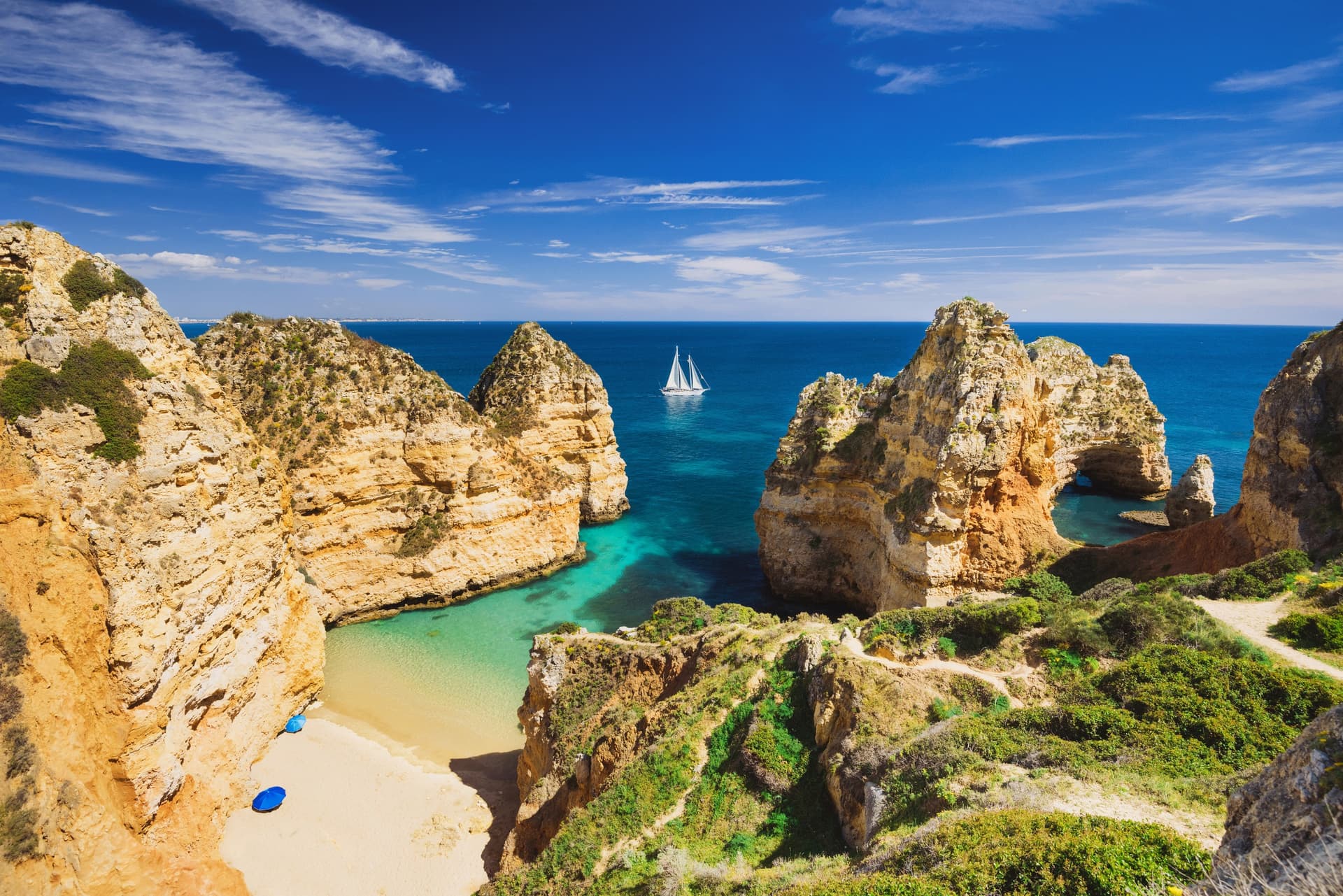
Southern Portugal enjoys a drier, warmer climate with abundant sunny days. Rain is rare, even in winter. The Algarve region, with its dramatic cliffs, is quite dry, though winters there are very pleasant.
The Centre
Central Portugal, near the Spanish border, features a more continental climate with very hot summers and fairly cold winters. The region is quite dry, even arid, especially in summer.
Madeira
Madeira is a Portuguese island blessed with a subtropical climate. It remains warm throughout the year.