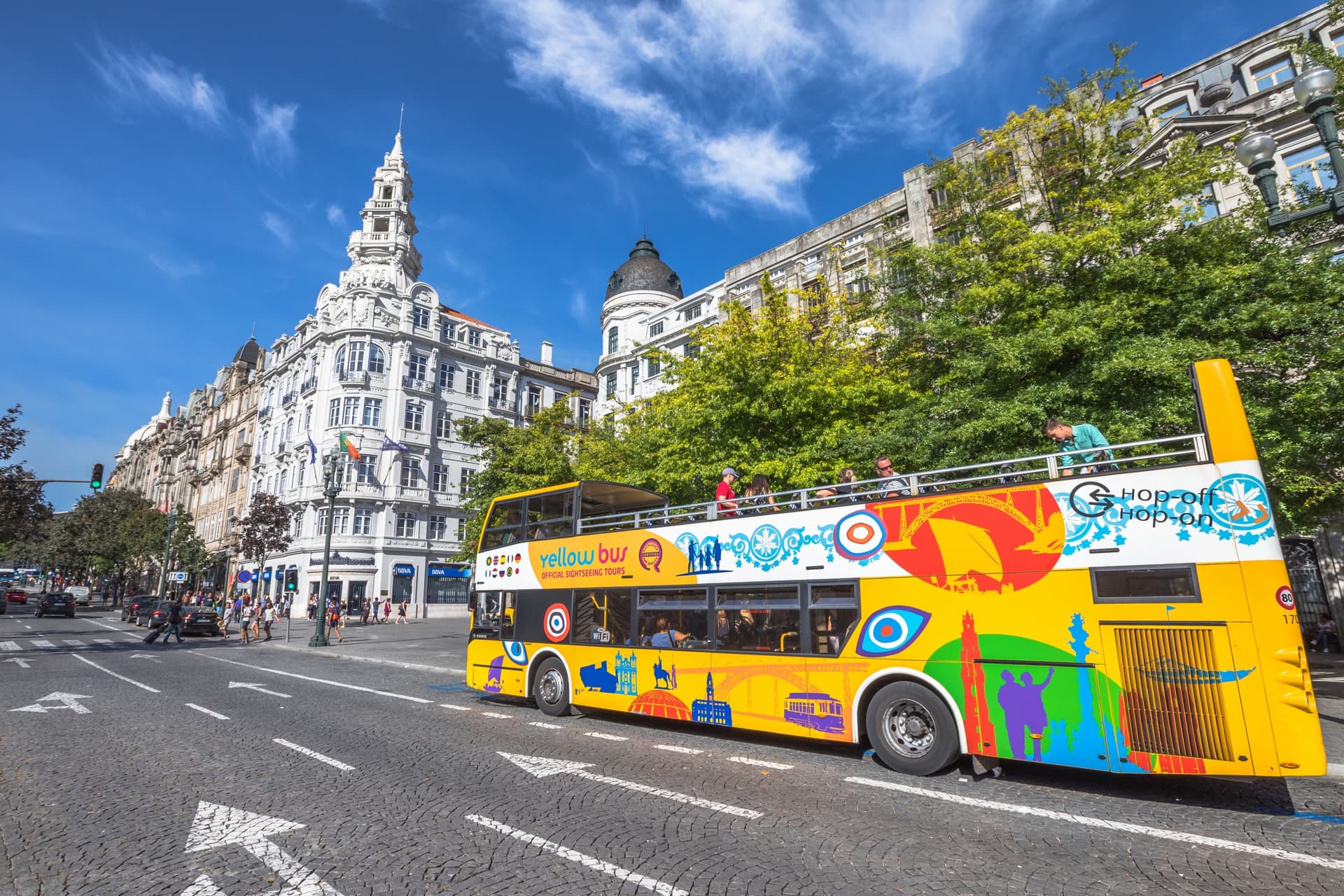
Transportation in Portugal
Portugal is a developed country in the eurozone. Road infrastructure and the entire Portuguese transport network are relatively well-developed. Whether you decide to rent a vehicle for your stay in Portugal or opt for a private car with driver, getting around will be simple and pleasant.
Portugal is a developed country in the eurozone. Road infrastructure and the entire Portuguese transport network are relatively well-developed. Whether you decide to rent a vehicle for your stay in Portugal or opt for a private car with driver, getting around will be simple and pleasant. Cities are equally well-equipped to facilitate sightseeing. In any case, here's everything you need to know about transportation in Portugal for your stay.
The Road Network
The Portuguese road network is perfectly well-developed. Dirt roads are rare, except around small remote villages, as you might encounter in the French countryside. Main roads (IC), national roads (N), and motorways (A) crisscross the country to make traveling easy.
Speed Limits:
- On main roads: the speed limit is 100 km/h. Dipped headlights must be on day and night.
- On national roads: the maximum speed allowed is 90 km/h
- On motorways: the maximum speed is limited to 120 km/h
| Important to Know If during your trip you wish to use a toll motorway, you will need to request an electronic badge. Indeed, certain motorways are subject to the "Electronic Toll Only" system. Your travel agency can advise you on this matter before your departure and provide all necessary information. |
|---|
Traveling by Bus in Portugal
Portugal benefits from an excellent bus network that makes it easy to travel throughout the country. The bus is also the most economical way to get around on budget-friendly trips. The most well-known bus company is Rede Expressos. In any case, coach companies in Portugal offer comfortable large buses for connections between the country's main cities. Other companies operate routes between Paris, Madrid, Brussels, and Portugal.
Although buses are very frequent, it is important to book your seats a few days in advance, especially during school holidays and peak tourist season.
Private Vehicles
During your stay in Portugal, you can choose to rent your own vehicle with the help of your travel agency or opt for a private vehicle with driver.
If you drive in Portugal, you must respect the traffic code and speed limits.
What You Need to Know
- A driver's license is essential to drive
- You must be at least 21 years old to rent a vehicle
- Seat belts must be worn, whether you are sitting in the front or back of the vehicle
- If you drive, your blood alcohol level must not exceed 0.5 g/l
- Speed limits must be respected (motorways: 120 km/h, main roads: 100 km/h, national roads: 90 km/h, and in towns: 50 km/h)
- Follow road signs and traffic lights
- All motorways in Portugal have tolls, whether traditional or electronic
- Motorway tickets are valid for a maximum of 12 hours
- All Portuguese taxis have a meter
- Parking in major cities is often scarce
The Rail Network
In total, the rails cover 3,000 km, including standard gauge lines, narrow gauge lines, and special lines for high-speed trains. The categories are as follows:
- Express trains (the "Alfa Pendular Deluxe")
- Inter-regional and inter-urban trains (the "inter-regionais" or IR and "intercidades" or IC)
- City trains or regional trains R (the metro, tram, and funicular)
For the first two options, reservations should be made as early as possible, whether made at train stations, multibancos (ticket machines), or directly online. You will need to choose between first class "conforto" or second class "turística". Within cities, stops are frequent for R trains. While the other alternatives only stop at major stations.
In any case, it's worth knowing that trains are primarily taken to discover the beauty and artistic and cultural richness of the stations. Lisbon is easily connected to Porto or to Coimbra-Guarda.
Also, while traditional trains are affordable, express trains offer only expensive tickets. It's worth noting that Portugal's rail network is connected to those of France and Spain. Finally, the metro and funicular only exist in Lisbon and Porto. As for trams, they operate in Lisbon, Coimbra, Porto, Almada, and Braga. Travelers can also purchase their Interrail Portugal Pass, which is the country's rail pass.
The Air Network
Domestic and international flights can be made over Portuguese territory. Its main airports are located in the major cities of Lisbon, Faro, Porto, the island of Madeira, and the Azores archipelago. TAP Portugal (Transportes Aéreos Portugueses), Portugália, and SATA are the country's national airlines.
The Maritime Network
Cruises promise an exhilarating adventure. Departing from Porto sailing on the Douro, or departing from Lisbon on the Tagus or Sado, ferry routes can be booked. The main Portuguese ports are located at:
- Aveiro
- Viana do Castelo
- Funchal (in Madeira)
- Horta, Ponta Delgada, Praia da Vitória (Azores)
- Leixões
- Lisbon
- Porto
- Setúbal