Douro Valley
Douro Valley
The world's oldest demarcated vineyard region, the Douro Valley unfolds its UNESCO terraces among quintas, river cruises, and hilltop villages.
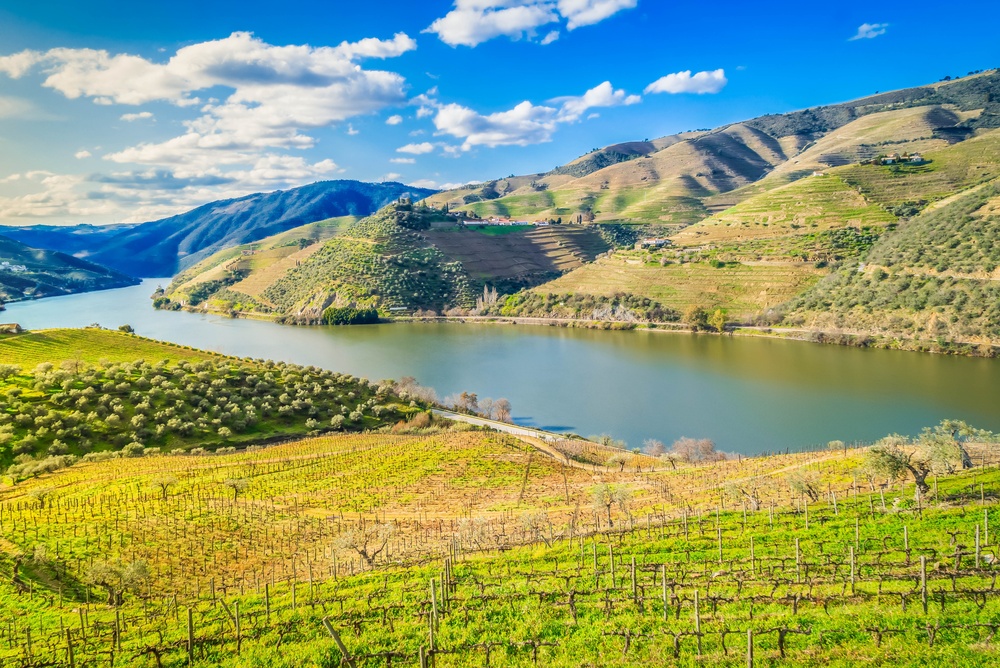
The Douro and its vast vineyard valleys stand as a reference point for Portugal's landscape architects. These valleys have earned UNESCO World Heritage status in recognition of their significance. The beauty of the lands stretching along the Douro River represents the principal draw of the country's northern region. The "river of gold" flows across Portuguese territory before emptying into the charming port city of Porto.
History
The Douro is not entirely a Portuguese river—only 240 km of its total length flows through the country. It originates in the "sierra de Urbión" mountain range in Spain. According to popular tradition, the name "Douro" has been in use since the 4th century BC. The etymological roots trace to "Rio D'Ouro," meaning "river of gold" in Portuguese.
Viticulture along the Douro's slopes began as early as 920 AD, making these regions pioneers of wine production in Europe. Notably, the valley became the first classic wine region to be officially delimited, in 1756. Since that year, the reputation of Portugal's wine lands has spread throughout Europe.
The relief and climate of the Douro Valley are remarkably favorable for grape cultivation. Summers bring dry, scorching days, while winters are harshly cold. Most Douro vineyards are planted on steep, sloping terrain. The granite giants of Marão block humid Atlantic winds, preserving optimal conditions for grape maturation. The fields of Pinhão, Távora, and Rio Torto are among the most celebrated of these verdant hillsides.
Why Discover the Douro Valley?
Wine Tourism
The Douro Valley functions as a living museum dedicated to viticulture. The region's most celebrated product is Port wine. Wine tourism centers on experiences tied to wine: tastings, cellar visits, vineyard tours, and insight into production processes from vine to bottle. Wine enthusiasts arrive from across Portugal to sample this precious nectar, whose secrets are held only by Douro cellars. At Peso da Régua, you'll find the "Douro Museum," itself a UNESCO World Heritage site. It showcases the history and heritage of Portugal's vineyards.
Places to Discover
The Douro's folklore offers an intensely natural perspective on Portuguese landscapes. The slopes of Pinhão grace postcards and documentaries worldwide. Writer Miguel Torga famously compared the Douro and its valley to a "geological poem." Your journey may include:
- The "Santuário de Nossa Senhora dos Remédios," a majestic church crowning Monte de Santo Estevão in Lamego. This structure ranks among architectural marvels worthy of Vatican chapels.
- The "Castelo de Numão" near Foz, standing at 667 meters elevation. Only ruins remain today, yet the panoramic views over the Douro justify the visit.
- The "Parque Arqueológico do Vale do Côa," an vast reserve of rock art dating to the Paleolithic era. Rock art represents humanity's earliest artistic expression—drawings and engravings carved into stone by our Homo sapiens ancestors.
- The "Parque Natural do Douro Internacional," one of Portugal's 13 natural parks.
Best Time to Visit?
Plan your journey between May and September for optimal conditions in the Douro. During these months, the valley enjoys sunny days with average temperatures around 19°C. Rainfall is also minimal (61 mm).
A river cruise along the Douro can take up to 6 hours. You'll encounter the wine valley's landscapes only during the final hour of the journey. Consider instead taking the train or bus to Régua first. Once there, you can continue by boat and fully appreciate the valley's slopes from the water, concluding your circuit with a visit to Porto.
Exploring the Douro Valley by car offers another excellent option, allowing you to travel at your own pace and stop as you wish. Three major paved national routes traverse the valley:
- Route 214, passing through the heights of São Salvador do Mundo.
- Route 222, running through Peso da Régua and Pinhão.
- Route 322, passing through the wine village of Vate de Mendiz, the Vale do Tua Natural Park, and the shores of Albufeira de Foz Tua reservoir.
Want to discover this destination?
Our local advisors design your tailor-made trip.