Pinhão
Pinhão
Pinhão, a wine village in the Upper Douro, captures the essence of port wine culture: UNESCO-listed slate terraces, the historic train station with its famous azulejos, and quintas open for tastings.
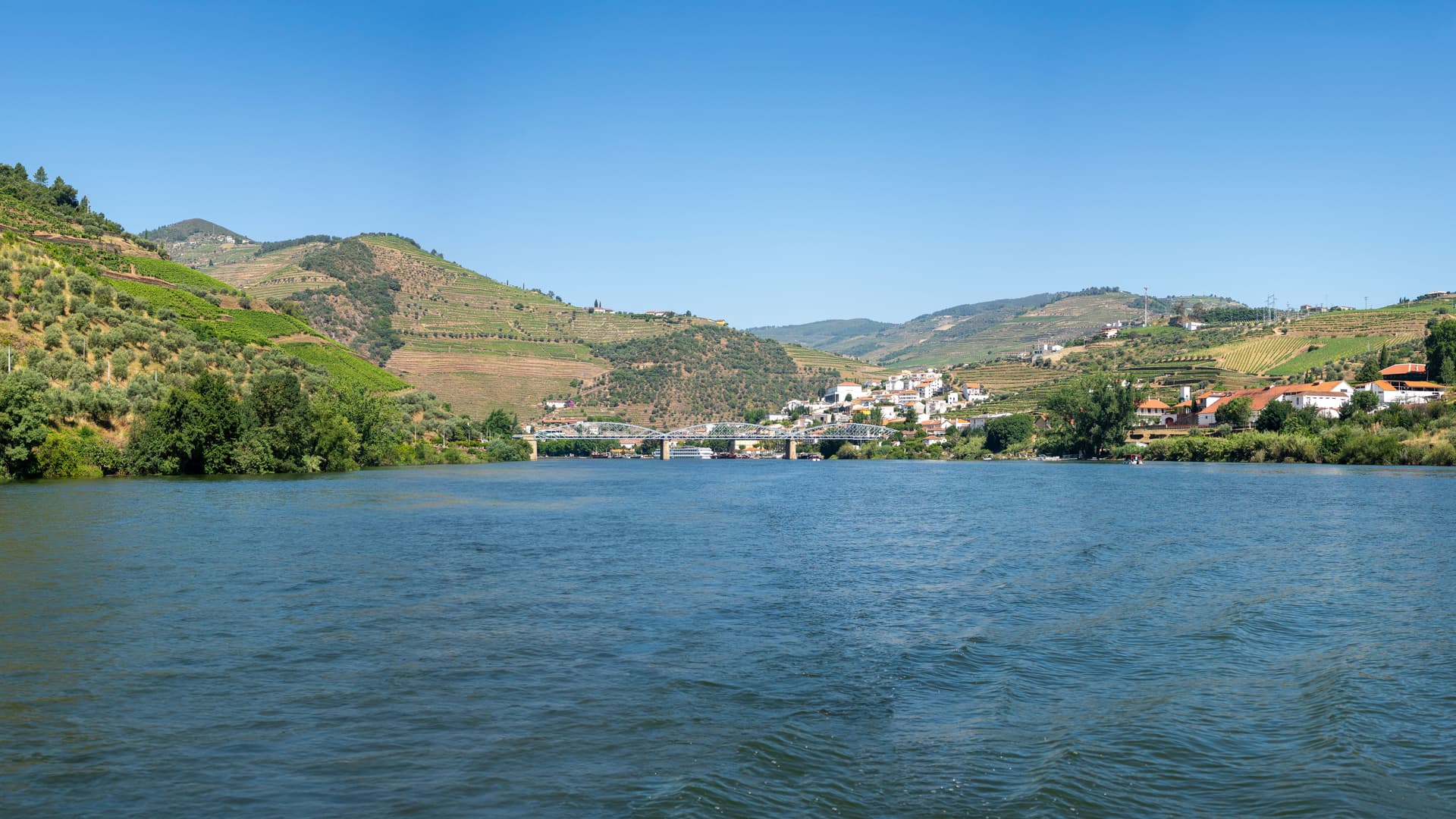
Pinhão is a wine village in the Upper Douro, nestled in a meander of the river about 25 km east of Peso da Régua. At the heart of the demarcated port region, it is surrounded by slate terrace vineyards descending to the water's edge. Its azulejos-covered station and centuries-old quintas make it a central stop for understanding port wine culture.
Practical information at a glance
- Access: Train from Porto (Douro line, approximately 2.5 hours) or by car via the IP4/A4 and N222.
- Recommended duration: A full day, or two nights to visit several quintas.
- Best time to visit: Harvest season (mid-September to mid-October) or spring for flowering vines.
- Accessibility: The village is compact but the terraced vineyards are not easily accessible for wheelchair users.
What to see
The landscape is dominated by socalcos terraces—slate stone walls that tier the vines on steep slopes. The Douro river, wide and calm at this point, reflects golden hills in autumn. The village itself is modest: a few streets, wine cellars, rabelo boats moored at the quay.
History and context
The Douro region is the world's oldest demarcated wine appellation, created in 1756 under the Marquês de Pombal. Pinhão developed as a loading point for port wine barrels destined for Vila Nova de Gaia. Rabelo boats, flat-bottomed vessels, navigated the river until the railway was built in 1879. Today, the quintas produce port and Douro DOC wines.
Highlights of a visit
The station and its azulejos
Pinhão station (1937) is lined with 24 blue and white azulejo panels depicting harvest scenes and Douro landscapes. It is one of the most photographed collections of faïence tiles in Portugal. Entry is free, even without a train ticket.
The quintas and wine cellars
Several historic quintas are open for visits with tastings: Quinta do Crasto, Quinta do Vale Meão, Quinta da Roêda (Croft), and Quinta do Panascal (Fonseca). Each offers vineyard tours and an explanation of the port wine-making process. Booking is recommended during peak season.
Cruises on the Douro
Boats departing from Pinhão's quay offer excursions up and down the river through the meanders and past the quintas. The view of the terraces from the water is dramatically different from that seen from the road.
The N222 and viewpoints
The N222 national road, running along the Douro between Régua and Pinhão, is renowned for its views over the river and vineyards. Several miradores allow you to stop and take in the UNESCO World Heritage landscape.
Photography tips
The golden light of late afternoon illuminates the south-facing terraces. In autumn, the vines turn red and ochre—the most photogenic time of year. For the station azulejos, arrive early to avoid crowds and benefit from diffused light. From the quay, the reflection of the hills in the Douro works best in early morning.
Location and access
Pinhão is located in Vila Real district, in the Douro valley, about 130 km east of Porto. The Douro train line connects Porto-Campanhã to Pinhão with several daily departures—the route follows the river for much of the journey. By car, the N222 from Peso da Régua is the most spectacular route. The village is small and easily explored on foot.
Nearby attractions
- Peso da Régua — Capital of the Douro wine region, home to the Museu do Douro and merchant wine cellars.
- Lamego — Baroque town with the sanctuary of Nossa Senhora dos Remédios and its 686 steps.
- Foz Côa — Paleolithic rock art site listed as a UNESCO World Heritage site, east of the Douro.
- Sabrosa — Birthplace of Fernão de Magalhães (Magellan), in the hills above Pinhão.
Frequently asked questions
Harvest season (mid-September to mid-October) is the most vibrant time: quintas are in full activity and the landscape is at its most beautiful. Spring offers lush green vines and fewer crowds. Summer is hot and dry—temperatures in the valley can exceed 40°C (104°F).
Yes, especially during harvest and summer. Most quintas require online or telephone booking. Some accept walk-in visits outside peak season, but it's best to confirm directly with each estate.
Yes, entry to the station hall to see the azulejos is free. You do not need to purchase a train ticket to admire the faïence panels.
Leave Porto early by train to Régua, visit the Museu do Douro, then take a train or drive the N222 to Pinhão in the afternoon. The return to Porto from Pinhão in the evening allows you to enjoy the golden light on the river.
Yes, boat excursions are available from Pinhão's quay. Longer cruises also depart from Porto or Régua and stop in Pinhão. Offerings vary by operator and season.
Yes. The Alto Douro Wine Region cultural landscape has been inscribed on the UNESCO World Heritage list since 2001, recognized for its two millennia of wine-making tradition and slate terraces.
Want to discover this destination?
Our local advisors design your tailor-made trip.