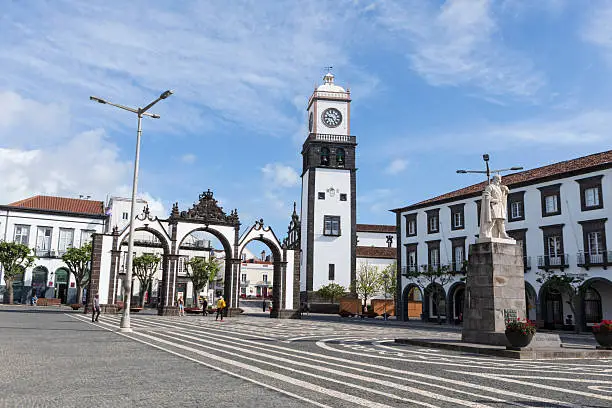
Seia
Seia opens the doors to Serra da Estrela, mainland Portugal's highest mountain range. Between the Bread Museum, PDO cheese and alpine landscapes, the town is a practical hub for venturing toward Torre and the high-altitude lakes.
Seia is a mountain town in central Portugal, nestled on the western slopes of Serra da Estrela. The natural gateway to mainland Portugal's highest massif, it combines a modest historic centre with direct access to the alpine landscapes of the natural park. It's a solid base for exploring fossil glaciers, high-altitude lakes and slate villages in the surrounding area.
Quick facts at a glance
- Access : from Coimbra or Guarda via the N17 / A23 ; no railway station, regional buses available.
- Recommended duration : 1 to 2 days for the town and initial park routes.
- Altitude : around 550 m, with the massif peaking at 1,993 m (Torre).
- Clothing : warm clothes essential at altitude, even in summer.
What to see
Seia's town centre preserves a few granite buildings typical of Beira Alta, a parish church and a lively square. The town is home to the Museu do Pão (Bread Museum), dedicated to regional baking traditions and rural life. A few kilometres away, the Serra da Estrela natural park unfolds its heathlands, glacial lakes and herds of Lusitanian sheepdog breeds.
History and context
Seia appears in medieval Portuguese charters and long lived from sheep farming and wool production. Serra da Estrela supplied wool, cheese and ice — the latter was transported on mule-back to coastal cities until the 19th century. Queijo Serra da Estrela, PDO cheese, remains the region's flagship product.
Highlights of your visit
Museu do Pão
This original museum traces the history of bread in Portugal through tools, traditional ovens and reconstructed rural scenes. It illustrates the central role of rye and wheat in Beira's mountain economy.
Access to Serra da Estrela
Seia is one of the most convenient starting points for reaching the mountain road to Torre. In winter, snow may close the passes ; in summer, the lakes of Covão dos Conchos and Lagoa Comprida are accessible as day trips.
Serra da Estrela cheese
The artisanal dairies in nearby villages (Sabugueiro, Gouveia) offer soft-paste cheese aged in winter. Seia's local market is a good spot for direct purchases.
Photography tips
The golden light of evening on the Serra's ridges is optimal from vantage points above Seia. In winter after a snowfall, slate villages create striking contrast against the white massif. Avoid midday in summer : thermal haze veils the summits.
Location and access
Seia is located in Guarda district, approximately 80 km from Coimbra and 50 km from Guarda. The town is crossed by the N17, the main axis on the western slope of Serra. No direct rail link ; a car remains the most practical option. Regional buses connect Seia to Coimbra and Guarda several times daily.
Nearby
- Sabugueiro — a mountain village renowned for its artisanal dairies and altitude, one of the highest in Portugal.
- Gouveia — a neighbouring town with a modern art museum and park access via the northern slope.
- Torre — mainland Portugal's highest peak, accessible by car from Seia via a scenic mountain road.
- Lagoa Comprida — the massif's largest natural lake, surrounded by heathland.
- Covilhã — a former centre of wool manufacturing on the other side of the massif, with a cloth museum.
Frequently asked questions
Summer (June–September) offers ideal hiking conditions. Winter (December–February) attracts snow enthusiasts, but high-altitude roads may close. Spring is pleasant for heathland flowers.
Buses connect Seia to Coimbra and Guarda, but accessing the park's natural sites is very difficult without a vehicle. Renting a car in Coimbra or Guarda is strongly recommended.
Seia's market and dairies in Sabugueiro offer PDO cheese directly from producers. The production season runs from October to March, when ewe's milk is richest.
Yes, especially if you're travelling with children or interested in Portuguese rural traditions. The visit is short (around an hour) and complements a day focused on the natural park.
Yes. The town offers varied accommodation and quick access to the park's main sites. Covilhã, on the other side of the massif, is an alternative if you wish to explore the eastern slope.
Want to discover this destination?
Our local advisors design your tailor-made trip.