Porto
Porto
Porto, Portugal's second-largest city, blends stunning azulejo tiles, centuries-old wine cellars and UNESCO-listed historic streets. Our complete guide to preparing your stay.
Porto is an unmissable destination when visiting Portugal. The city is the country's second-largest after Lisbon. Porto is highly sought after for short breaks, but is equally regarded as an important stop during an extended stay in Portugal. Situated on the country's north-western coast, it is also crossed by the Douro River. Its colourful houses and small history-laden streets, classified as a UNESCO World Heritage site, utterly captivate visitors.
History
Once, the city was a small hamlet populated by Celts. The ancient Romans had named it Cale. For economically strategic reasons, a port was built: the port of "Porta Cale". Later, in 1139, this name was adopted to give rise to the toponym "Portugal". Porto is the emblematic city that gave the country its name.
In October 1143, after several battles between the Moors and the kingdom of Castile and Leon, Count Alphonse Henriques was crowned King of Portugal. Since then, October 5th has become Portugal's national holiday, honouring this coronation.
Following the country's independence, maritime and commercial flows through Porto became increasingly important. The city became one of Europe's most productive strategic points. This continued until the 18th century, which became known as Porto's "Golden Age".
Today, Porto is increasingly viewed as a cultural destination rather than a port city. In 2001, it was named European Capital of Culture. The imposing Casa da Música auditorium was then constructed in Boavista. This auditorium remains a testament to Porto's cultural richness to this day.
Why Porto?
Porto is a lively city both day and night. You will not lack for activities and places to visit. Porto is often chosen by travellers for a weekend or short break. Indeed, close to France, flights are quick and affordable.
Places to Discover in Porto
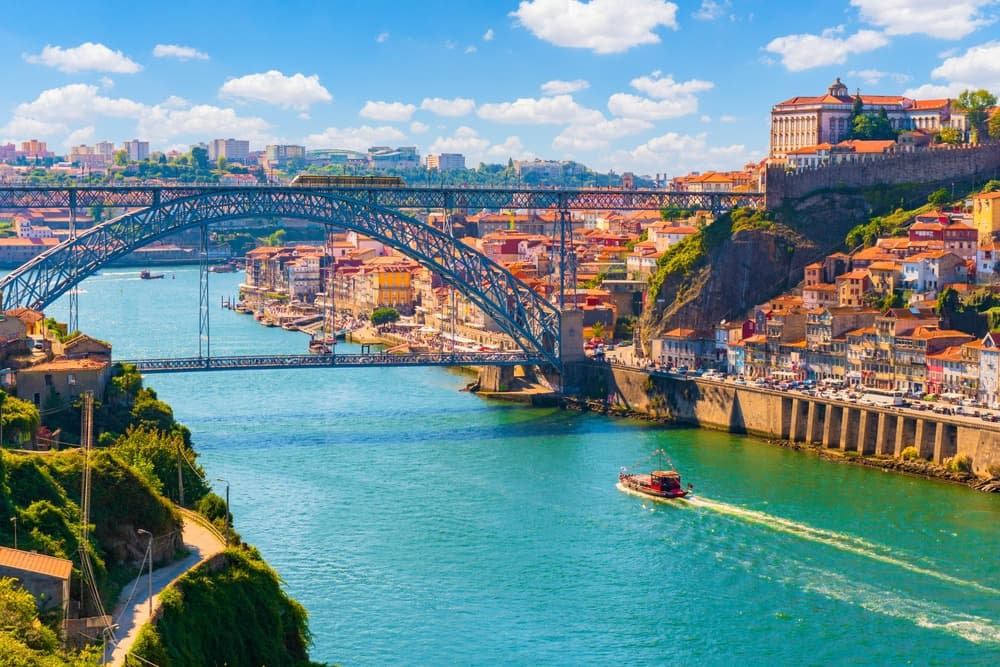
The Ribeira district is a colourful corner on the northern bank of the Douro. Ribeira is a neighbourhood that vibrates with the aromas of spring festivals during the day, while at night the district transforms into a glittering odyssey. Bars, nightclubs and restaurants invite you to immerse yourself in Portuguese atmosphere.
The Douro River flows through the entire city. The atmosphere aboard small cruise boats gliding along the river is punctuated by city noise and Portuense musicians.
You can also head to Foz do Douro, where the river flows into the Ocean. Foz do Douro beach is regularly frequented. Here, swimming and festivities are welcome.
For those preferring more greenery and intimacy, the Palácio de Cristal gardens open their doors to travellers. This garden was designed in the French style in the 19th century. The elevated position of this garden offers an unobstructed view of Porto. At the heart of the garden, the Pavilhão Rosa Mota, a sort of dome-shaped amphitheatre, hosts concerts and indoor sporting events during festivities.
Porto is a Cultural Destination
Porto is a city of artists, but it is also a city made of art. The azulejos are its manifestation. Azulejos are cement tiles entirely hand-painted. Typically Portuguese, these tiles are found almost everywhere on the walls of Porto's houses and buildings. At São Bento train station you can admire a large fresco made up of 20,000 tiles. This fresco tells the story of Portugal.
Casa da Música is an immense, highly distinctive auditorium. Its architecture is distinguished by geometric forms at the crossroads of futurism and contemporary art. The auditorium regularly hosts concerts throughout the year.
Francesinha is part of local culinary culture. This sort of indulgent croque-monsieur is a distinctly Portuguese dish. You will have the opportunity to taste it in nearly every restaurant in the city. And don't forget to visit Porto's wine cellars.
What's the Best Time to Visit?
If you're in a festive mood, the best time to visit Porto is June. The festivities are in full swing on Porto's streets during this month. Locals celebrate the Feast of St. John (the city's patron saint).
To make the most of activities and sightseeing, travel to Porto between June and September. Days are sunny, temperatures hover around 21°C and it rarely rains.
From October to May, temperatures drop, but not to wintry extremes. However, the weather becomes rainier.
Direct flights connect Paris to Porto year-round. Tickets are relatively affordable—you can find them for under €100. Nevertheless, in June prices rise slightly due to summer season, with tickets reaching around €200.
If you're already in Portugal, you can easily reach Porto by train or bus from other cities. You can also rent a vehicle and follow your GPS.
Porto is a city with narrow streets and an unusual traffic pattern. The highway code is not the same as in France. So avoid driving around the city too much. Underground car parks have been set up throughout the city for visitors to park their vehicles (at €15 to €30 for 24 hours).
For getting around the city, there are 3 tram lines and 6 metro lines serving all of Porto's attractions (81 metro stations in total). The city is best explored on foot.
You can also enjoy small boats sailing on the Douro, offering a pleasant river ride and an alternative way to get around.
Want to discover this destination?
Our local advisors design your tailor-made trip.