São Miguel
São Miguel
São Miguel concentrates calderas, bicolored lakes, fumaroles, and tea plantations on an Atlantic island of less than 750 km². An active volcanic territory to explore in 4 to 7 days from Ponta Delgada.
São Miguel is the largest island in the Azores archipelago, set in the heart of the North Atlantic. Dormant volcanoes, crater lakes in shades of emerald and cobalt, hot springs, and jagged coastlines: the island concentrates spectacular geology within less than 750 km². Ponta Delgada, its capital, serves as the entry point and logistical hub for exploring a territory where nature dominates every landscape.
Quick Facts
- Getting there: Direct flights from Lisbon, Porto, and several European cities to João Paulo II Airport (PDL), just kilometers from Ponta Delgada.
- Getting around: Car rental is highly recommended — public transport doesn't cover the island's interior well.
- Suggested duration: 4 to 7 days to cover the main sites without rushing.
- What to wear: Layering is essential — weather changes rapidly at altitude.
- Swimming in hot springs: Swimwear required in the developed thermal pools.
What You'll See
São Miguel's landscape alternates between calderas covered in blue hydrangeas, cryptomeria forests, tea plantations (Europe's only ones), vineyards, and cliffs battered by the Atlantic. The Sete Cidades lakes—one green, the other blue depending on the light—occupy a caldera several kilometers in diameter. Furnas hosts a volcanic lake surrounded by fumaroles and mud geysers.
History and Context
Discovered and settled by the Portuguese in the 15th century, São Miguel long lived off agriculture (woad, oranges, pineapples, tea) and livestock. The island remained relatively isolated until tourism development in the 2010s. Its status as an autonomous Portuguese region gives it a distinct cultural identity, blending mainland traditions with Atlantic insularity.
Highlights
Sete Cidades
The Sete Cidades caldera is the island's symbol. The Vista do Rei viewpoint offers the island's most photographed view: the two lakes separated by a narrow bridge, framed by green slopes. Hiking trails circle the crater or descend to the lakeshores.
Furnas
The village of Furnas is built on an active geothermal zone. The caldeiras bubble in the open air within Terra Nostra park, where an iron-rich thermal pool allows for swimming. The cozido das Furnas, a stew cooked underground by volcanic heat, is the island's signature dish.
Lagoa do Fogo
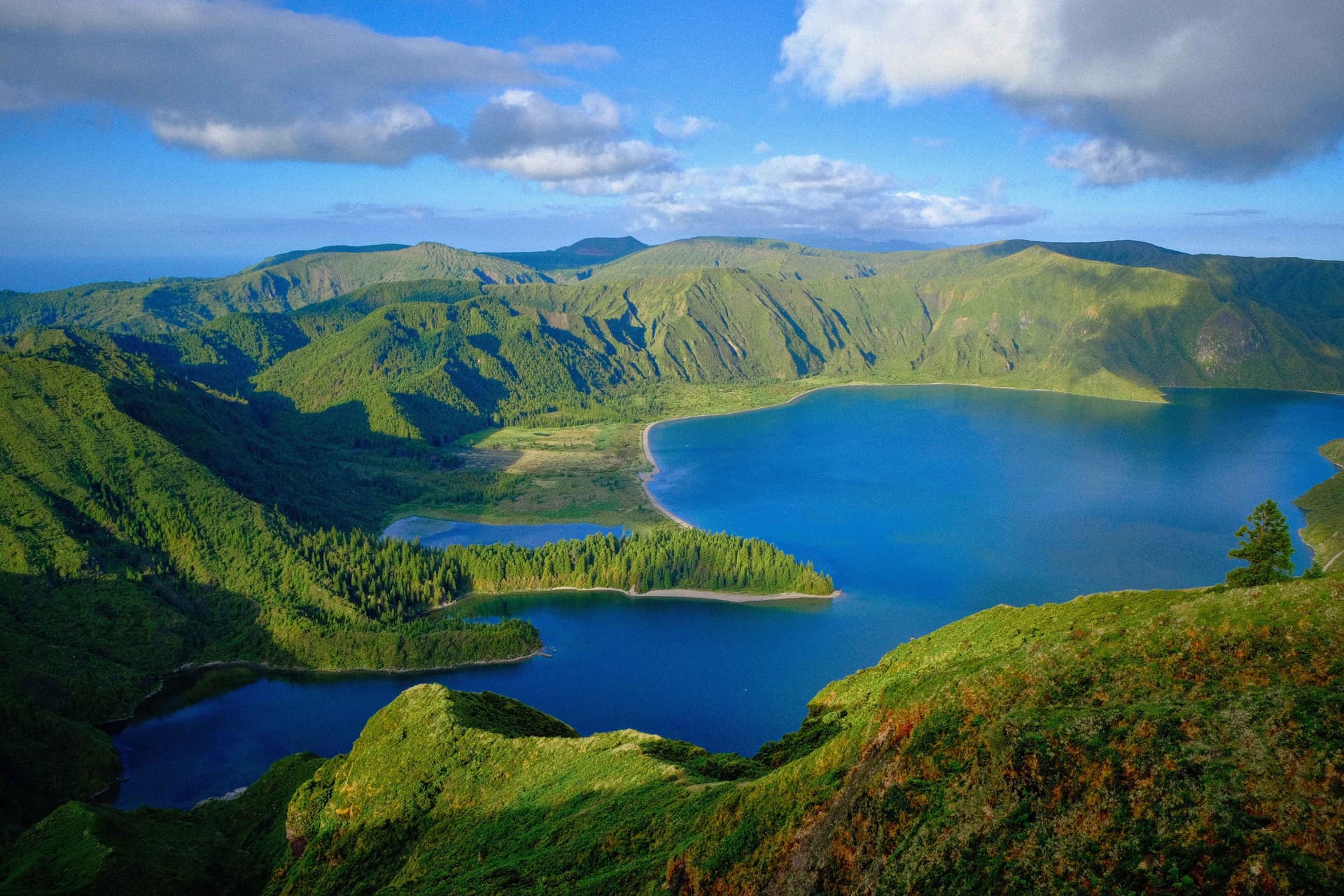
This crater lake at the island's center, protected as a nature reserve, is accessible via a trail from the main road. Its turquoise waters and white volcanic sand beaches make it one of São Miguel's wildest sites.
Gorreana and Porto Formoso Tea Plantations
The Gorreana plantations are Europe's oldest still in operation. Factory tours are free and open; you'll see period machinery and can sample the various tea varieties produced on-site.
Ponta Delgada
Ponta Delgada merits half a day: the Portas da Cidade (18th-century baroque arches), the São Sebastião church, and the lively waterfront compose a compact and pleasant historic center to explore on foot.
Photography Tips
Morning light is ideal at the Sete Cidades and Lagoa do Fogo viewpoints, before clouds settle over the heights. Furnas' fumaroles are more photogenic in cool weather. Blue hydrangeas lining the roads bloom from June to September—the year's most colorful period.
Location and Access
São Miguel lies in the Azores archipelago, approximately 1,500 km west of Lisbon. João Paulo II Airport serves the island from Portugal's main cities and several European capitals. Once there, car rental remains the most convenient option: roads are well-maintained but winding at altitude. Accessibility for visitors with reduced mobility is limited on natural trails; developed sites like Terra Nostra have accessible paths.
Nearby Attractions
- Sete Cidades — volcanic caldera with two distinctly colored lakes, on the island's west side.
- Furnas — geothermal village, hot springs, and volcanic cuisine, to the east.
- Lagoa do Fogo — wild crater lake at the island's heart, accessible on foot.
- Gorreana — European tea plantation, free visits and complimentary tasting.
- Ponta Delgada — island capital, baroque architecture, and lively waterfront.
Frequently asked questions
May to October offers more stable weather and pleasant temperatures. June to September marks the blue hydrangea bloom. The island is visited year-round, but winters can be rainy and windy.
Yes, it's highly recommended. Public transport exists but doesn't cover interior natural sites well. A car lets you connect Sete Cidades, Furnas, and Lagoa do Fogo in a single day.
Yes, notably at Furnas (Terra Nostra thermal pool) and certain natural coastal pools. Swimwear is required in developed areas. Terra Nostra's iron-rich water may stain light fabrics.
Four days allow you to cover the main sites. Seven days give time to explore hiking trails, coastal villages, and perhaps combine with an excursion to a neighboring island.
The main trails (Sete Cidades, Lagoa do Fogo, Pico da Vara) are marked and catalogued by the nature park. Some require authorization or a guide depending on the season—check with local tourism offices.
Yes, the Azores rank among Europe's best cetacean-watching destinations. Boat excursions depart from Ponta Delgada, mainly March to October, when several whale and dolphin species frequent the archipelago's waters.
Want to discover this destination?
Our local advisors design your tailor-made trip.